It's Friday morning, and the finance department at a leading private school in Kuwait City is in crisis mode. The school secretary has been making calls all week to parents whose tuition payments are overdue. She's called 47 families, and 23 didn't answer. Of those who did answer, 12 agreed to pay but pushed the date to next month, and 5 haven't responded to her follow-up messages. Meanwhile, the receptionist has three more families waiting at the front desk asking when they can register their children for the upcoming semester. The financial dashboard shows 180,000 Kuwaiti dinars in outstanding fees — money that the school desperately needs for salaries, rent, and equipment upgrades. Every day without payment delays cash flow and creates uncertainty for staff and students.
Fee collection without automation turns every month into a stressful negotiation process. In Kuwait's competitive private education sector, schools can't afford to alienate parents while simultaneously losing revenue that funds the entire operation. The traditional model of sending emails or making phone calls after the due date creates delays — parents receive reminders only when the amount is already overdue, which reduces compliance and increases the emotional friction of payment. Schools end up spending hours every week on collection activities that could be better spent on student support and curriculum development.
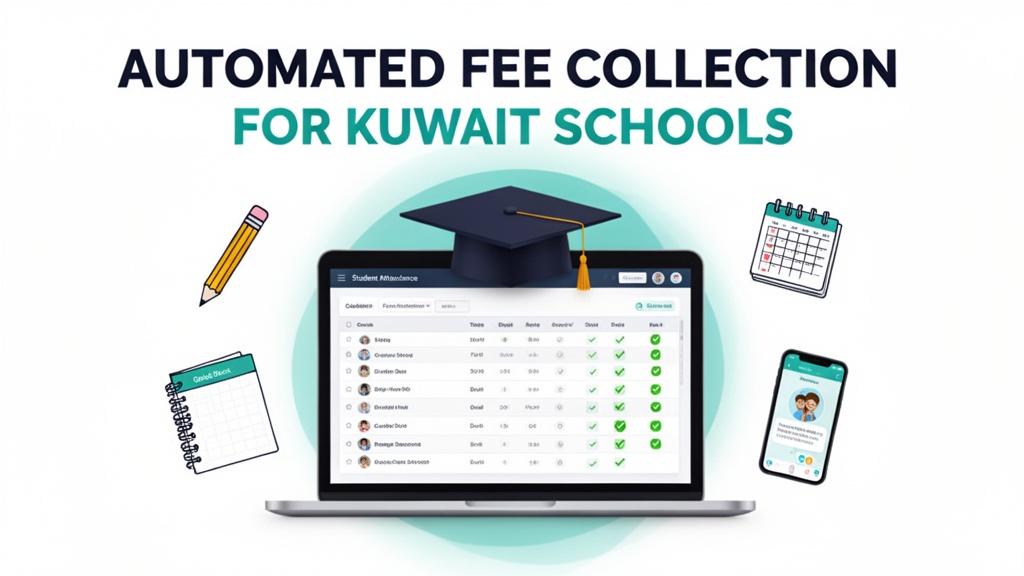
The School Management System from Ubisky transforms how schools in Kuwait handle fee collection by automating the entire process from notification to payment. When a student's fee payment is due, the system automatically generates a personalized reminder message via WhatsApp and sends it to the parent's registered mobile number. The message includes the amount due, due date, and a direct link to the secure payment portal. Parents can complete the payment in under 60 seconds, and the system immediately updates the student's record and generates a payment confirmation. No more chasing payments manually — the system handles the entire workflow.
Automated fee collection and payment reminders significantly reduce collection lags. In the first three months after implementation, Kuwait schools using the system see a 35-45% reduction in overdue fees, directly translating to more predictable cash flow. Parents appreciate receiving timely reminders and find it easier to pay when the process is seamless and doesn't require multiple phone calls or emails. Schools benefit from higher payment rates and reduced administrative burden on staff who previously spent 8-10 hours weekly on collection activities.
Parent portal for progress tracking and communication gives families visibility into their child's academic performance and payment status. The portal displays upcoming fee deadlines, allows parents to view payment history, and enables two-way communication with teachers. When parents can monitor their child's progress and payment status in one place, they feel more engaged with the school and are more likely to stay informed about important deadlines. The portal also reduces administrative queries as parents can find answers to common questions without calling the school.
Digital attendance with automated parent SMS/WhatsApp alerts streamlines attendance tracking while keeping families informed. The school records attendance digitally, and within seconds, parents receive an automated message notifying them whether their child was present, absent, or late. In Kuwait, where school absences can have cultural implications and parents may not receive calls from teachers, this automated communication provides peace of mind and ensures that families are aware of attendance patterns. Schools can also identify patterns of absenteeism and follow up proactively.
Online exam management and grade publishing eliminates the paperwork associated with assessments and provides transparency for parents. Teachers create and manage exams digitally, assign them to students, and publish results to the parent portal. Parents can access grade reports, see which topics their child excels in, and identify areas for improvement. This reduces the time teachers spend on manual grading and distribution of report cards while giving parents real-time access to their child's academic progress. In Kuwait's competitive education environment, this transparency builds trust between schools and families.
| Stat | Value |
|------|-------|
| Revenue lost to late fees | 30-40% |
| WhatsApp open rate | 90%+ |
| Reduction in collection lags | 35-45% |
Kuwait's private education market operates under specific conditions that make automated fee collection particularly valuable. The country has over 120 private schools serving approximately 400,000 students, creating a competitive landscape where schools must provide excellent service to attract and retain families. Many Kuwaiti families have two or more children attending different schools, creating a complex schedule of tuition payments across multiple institutions. When payments are managed manually, parents often forget or delay payments, and schools struggle to track which families have settled their obligations.
KNET, Kuwait's domestic card payment network, has excellent penetration across the country, making online payments convenient for Kuwaiti families. However, even with KNET integration, the most effective approach combines digital payment options with automated reminders. The combination ensures that parents receive timely notifications and can pay through the method that's most convenient for them — whether that's KNET, bank transfer, or cash payment at school. Schools that implement automated reminders see the highest collection rates because parents receive friendly, timely nudges before payment becomes overdue.
The cultural emphasis on education and parental involvement also influences how fee collection should be handled. Kuwaiti parents are typically highly engaged in their children's education and value clear, consistent communication from schools. When schools use automated messaging that respects cultural norms and communicates respectfully, parents are more likely to respond positively. The WhatsApp reminders from the School Management System are written in a tone that's professional yet approachable, aligning with Kuwaiti communication preferences.
Getting started with automated fee collection is straightforward. Schools begin by migrating their student database into the School Management System, which takes approximately one week with proper planning. Next, school administrators configure the fee structure, payment deadlines, and reminder schedules based on local practices — for example, aligning with the academic calendar and public holidays in Kuwait. During a two-week pilot with a sample group of 50-100 families, the automated reminders are tested and refined based on response rates. Once the pilot shows positive results, the system is rolled out to the entire school, with staff trained on how to support parents who may need assistance with the digital process.
> Book a free demo — we'll show you how Kuwait schools use our system to automate fee collection and reduce lags
Join 400+ businesses across GCC, Africa and South Asia already using Ubisky. Free 30-day trial — no credit card required.
Book a Free Demo | Explore School Management System
Can the system send reminders in Arabic for Kuwaiti families?
Yes. The School Management System supports multiple languages and can send automated reminders in Arabic, English, or Hindi, ensuring that all parents receive messages in their preferred language.
Does the system integrate with KNET payment terminals in Kuwait?
Yes. The system includes KNET integration, allowing parents to pay tuition directly through the payment portal using their KNET cards or bank accounts. Payments are automatically recorded in the system and synced with the student's fee status.
How do we migrate 500+ student records to the system?
We provide a CSV import tool that accepts standard formats for student and family data. For larger schools, we offer a data migration service that handles the entire process, including mapping existing records and ensuring all data is accurately transferred.
Can we use different payment plans for different grade levels?
Absolutely. The system allows schools to configure custom fee structures for different grade levels, categories, or student types. You can set different due dates, installment plans, and payment methods based on your needs.
What happens to student data if we cancel the subscription?
All data remains the property of the school. Upon cancellation, we provide a full export of all student records, fee history, and attendance data in standard formats. You can migrate this data to another system or keep it for your records.
Kuwait schools that have implemented the School Management System report significant improvements in fee collection efficiency and parent satisfaction. The automated reminder system reduces the time spent on collection activities by up to 80%, allowing finance staff to focus on more strategic tasks. Parents appreciate the convenience of digital payments and timely reminders, which reduces the stress associated with managing multiple school fees. Schools benefit from more predictable revenue, improved cash flow management, and stronger relationships with families who feel that their payments are handled professionally and transparently.
Streamline your school's fee collection process today — explore the School Management System.
See School Management System in Action
Join 400+ businesses across GCC, Africa & South Asia already using Ubisky.
Free 30-day trial — no credit card required.