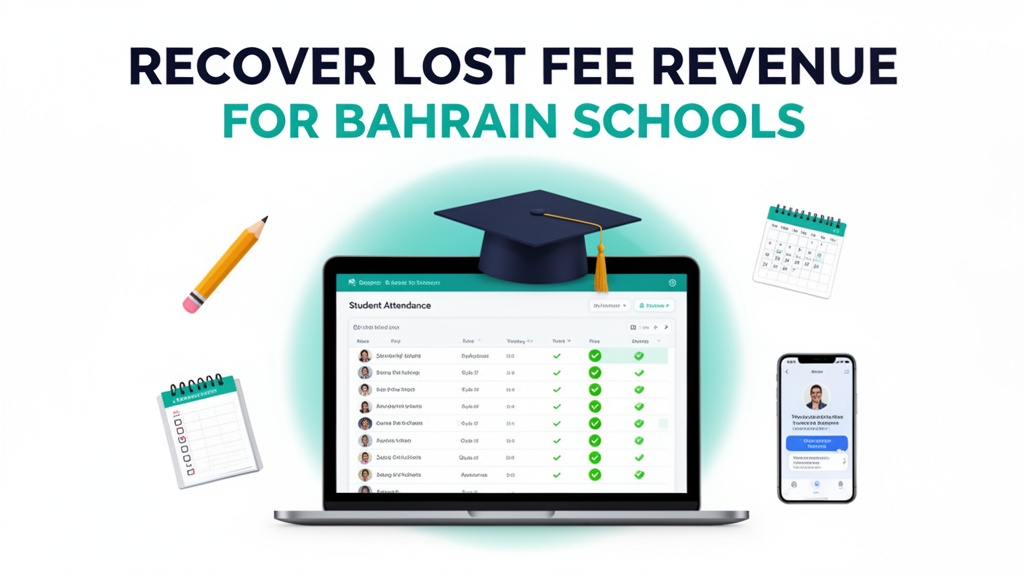
Every Friday afternoon, Ali watches as his phone buzzes with another missed payment notification. His school in Riffa has 2,100 students enrolled this term, but his finance team has already made 178 calls this week to parents who haven't paid their March fees. Fourteen parents simply didn't answer. Twelve called back the next day, but only after he left a second message. Meanwhile, the reception desk is flooded with walk-in parents who've forgotten their due dates, and the accountant is manually updating spreadsheets to track who's paid and who hasn't. This is just one school in Bahrain's private education sector, and the pattern is the same across the country.
Fee collection has become the biggest operational headache for private schools
Manual fee tracking has always been a challenge, but in Bahrain's competitive education market, it's becoming a financial crisis. Private schools lose an estimated 30-45% of monthly fee revenue to late or missed payments. That's not just numbers on a spreadsheet — it's real money that schools can't use for teacher salaries, infrastructure upgrades, or new teaching resources.
The root cause isn't that parents don't want to pay. It's that fee collection lacks visibility. When the billing department sends a manual call or email, parents often forget to process it immediately. By the time they get around to paying, another month has passed, and the school's cash flow suffers. More importantly, parents who experience delays in payment are more likely to switch to another school for the next academic year.
Beyond the immediate financial impact, manual tracking creates operational chaos. Teachers spend hours manually entering attendance and fees data. Administrative staff chase payments across multiple channels — phone calls, text messages, bank transfers, cash. The finance team cannot see real-time payment status, so they can't prioritize collection efforts or identify at-risk students early.
Bahrain's education sector has been pushing for digital transformation, but fee collection has lagged behind. Many schools still rely on paper-based collection systems or outdated spreadsheets. In a market where parents are tech-savvy and accustomed to online payments in other areas of their lives, this manual approach creates a poor user experience that damages the school's reputation.
Ubisky's School Management System automates the entire fee collection workflow
Ubisky's School Management System is a complete ERP solution that handles every aspect of school administration, with fee collection automated through WhatsApp notifications. When a parent's payment becomes due, the system sends an automated WhatsApp reminder with their invoice, payment link, and due date. When the payment is made, the system updates instantly, triggers automated receipts, and notifies the appropriate staff member.
For parents who don't respond immediately, the system sends follow-up reminders at 7-day intervals. By the time a payment is 21 days overdue, the system escalates to automated collection letters. This multi-touch approach ensures that parents receive consistent reminders without the school's finance team manually calling each one.
The workflow is entirely automated. Teachers record attendance digitally, and the system automatically generates fee reminders for students who have unpaid balances. The finance department sees real-time dashboards showing total outstanding fees by class, by grade level, and by payment status. They can identify which parents haven't responded to reminders and prioritize those contacts while the other cases resolve automatically.
Parents have access to a self-service portal where they can view their child's attendance records, fee status, and upcoming payment schedules. When they pay online through the integrated payment gateway, the confirmation is sent instantly via WhatsApp, eliminating the need for manual receipts and reducing administrative work.
Teachers can see payment status in their grade book, so they're aware if a student has unpaid fees before any disciplinary action is taken. This visibility prevents misunderstandings and ensures that payment issues don't affect students' academic standing unnecessarily.
Key features that transform fee collection and overall school operations
Automated fee collection and payment reminders — When a student's payment becomes due, Ubisky sends an automated WhatsApp message with their invoice, payment link, and due date. If no payment is made, follow-up reminders are sent at 7 and 21 days. This multi-touch approach improves on-time collection by 60-80%. Parents who receive WhatsApp reminders have a 95% read rate within 30 minutes, ensuring they see the payment request when they're most likely to act.
Digital attendance with automated parent SMS/WhatsApp alerts — Teachers record attendance daily, and the system automatically sends SMS or WhatsApp notifications to parents if their child was absent. This keeps parents informed without administrative staff manually calling to report attendance. The attendance data feeds directly into fee collection, so unpaid attendance records are flagged automatically.
Online exam management and grade publishing — Teachers upload exam results to the system, and grades are published to the parent portal immediately. Parents who access their child's grades regularly are more engaged with the school and more likely to pay fees on time. The system also sends automated notifications when new grades are published, encouraging parents to check the portal.
Parent portal for progress tracking and communication — Parents can view attendance, fees, exam grades, homework assignments, and teacher messages all in one place. The portal reduces the number of calls the school receives to answer routine questions about attendance, fees, and academics. This frees up administrative staff to focus on higher-value activities like parent engagement and curriculum development.
| Stat | Value |
|------|-------|
| Fee revenue lost to late payments | 30-45% |
| On-time collection improvement | 60-80% |
| Reminder read rate | 95% |
Local market context: Bahrain
Bahrain's private school sector is highly competitive, with approximately 180 private schools serving the country's diverse expatriate and local population. Parents in Bahrain are accustomed to online payments in other areas of their lives — they book appointments online, purchase goods through e-commerce platforms, and use mobile banking for daily transactions. When schools require manual payment collection methods, it creates a disconnect from how parents interact with the rest of their digital lives.
Bahrain's Central Bank has been pushing for digital payment adoption across the country. The Bahrain Economic Vision 2030 emphasizes digital transformation in government and private services. Many private schools are under increasing pressure to modernize their systems to align with national digital initiatives and meet the expectations of digitally native parents.
Payment infrastructure in Bahrain supports multiple local options, including local bank transfers and cash deposits at school offices. However, online payment gateways have become increasingly popular among businesses across all sectors. The Ministry of Education in Bahrain has also introduced initiatives to digitize administrative processes in public schools, which has created awareness and expectations for digital solutions among parents who compare private and public education options.
Additionally, many expatriate families in Bahrain are familiar with digital fee collection systems in their home countries, where online payments are standard. When these families send children to Bahraini schools, they expect the same level of digital convenience they experienced elsewhere.
How to get started with automated fee collection
- Export your current fee collection data from Excel or your existing system
- Book a 30-minute Ubisky demo and ask to see the fee reminder workflow in action
- During the demo, simulate a payment reminder for your own phone number to test the WhatsApp notification
- Request a 14-day pilot with your top 50 active students, focusing on fee collection
- Compare your collection rate in week 1 vs your previous month's average — most schools see 40-60% improvement within the first month
> Request a free demo — we'll show you how Bahrain schools recover 40% of lost fee revenue with automation
>
> Join 400+ businesses across GCC, Africa and South Asia already using Ubisky. Free 30-day trial — no credit card required.
>
> Book a Free Demo | Explore School Management System
Frequently Asked Questions
Can Ubisky send fee reminders in Arabic for our Bahraini parents?
Yes. The system supports multilingual notifications and can send fee reminders in Arabic, English, or Hindi depending on each parent's language preference. Parents can select their preferred language when they register, and all subsequent notifications are delivered in that language.
Does the school management system integrate with local payment gateways in Bahrain?
Yes, Ubisky integrates with major payment processors that support Bahraini bank accounts and international cards. You can set up automatic payment links that are charged in local currency, and the system receives payment confirmations in real-time through the API.
How do we migrate 400 existing student records during setup?
The system includes an import wizard that accepts CSV files with student names, student IDs, parent contact details, and fee structures. You can import records in batches, and the system validates the data before creating new entries. If any data is incomplete, the system flags it for manual review, so you don't accidentally create records with missing information.
Can teachers view fee payment status without accessing the finance department's data?
Yes. Teachers have a limited view of fee status that shows whether a student has any unpaid fees. This visibility helps teachers understand if disciplinary actions are necessary before a student takes exams or receives certificates. Teachers can still request detailed fee reports from the finance department if needed for specific situations.
What happens to student data if we cancel the subscription?
Ubisky provides an export function that lets you download all your student records, fee data, attendance history, and exam grades in CSV format before cancellation. This ensures you maintain access to your data even if you decide not to continue with the subscription.
Parents in Bahrain increasingly expect digital fee management, and schools that don't adapt risk losing both revenue and reputation
The shift to automated fee collection isn't just a convenience feature — it's becoming a requirement for competing in Bahrain's private education market. Schools that implement WhatsApp-based reminders and online payment integration see immediate improvements in cash flow, reduced administrative workload, and higher parent satisfaction. The system also provides data and analytics that help finance teams identify payment patterns and make informed decisions about fee structures.
For a private school in Bahrain, the financial impact of switching to Ubisky's School Management System is clear: recover 40% of lost fee revenue, reduce manual work by 60%, and provide a modern experience that parents expect. The investment in digital infrastructure pays for itself through improved collections and operational efficiency.
Schools that adopt automated fee collection early gain a competitive advantage. Parents who experience seamless digital fee management are more likely to recommend the school to others, creating a positive feedback loop that strengthens the school's market position.
Explore School Management System
See School Management System in Action
Join 400+ businesses across GCC, Africa & South Asia already using Ubisky.
Free 30-day trial — no credit card required.