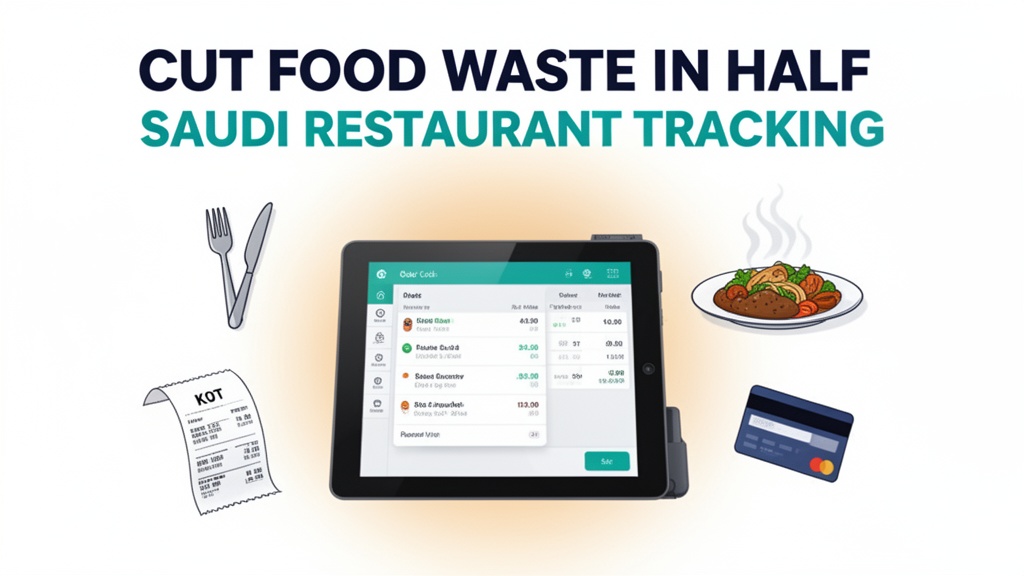
Your Riyadh restaurant's head chef opens the walk-in cooler at 6 AM on Tuesday. The lamb you ordered on Thursday — 30 kilos, delivered Friday — sits in the corner. Today is Tuesday. 6 days have passed. Another 20 kilos of salmon fillets arrived yesterday, unopened. The prep team pulled 15 kilos of mixed vegetables from inventory yesterday for the lunch buffet, but only 8 kilos were actually used. The rest sat in the prep cooler, now too old for today's service. Your chef sighs. This is the third time this month. He makes a note to reduce the lamb order next week. He's already made this note twice. The order went in unchanged because the morning rush started and he forgot. Food waste is eating 8% of your revenue every month. In Saudi Arabia's restaurant market, where margins are tight and competition is fierce, that's the difference between profit and loss.
Inventory Waste Without Tracking Is Silent Revenue Drain
The problem isn't one big mistake. It's dozens of small ones every week. Over-ordering because you don't know exactly what's in the cooler. Ingredients expiring because prep teams pull more than they use. Dishes running out mid-service because inventory wasn't checked before service. Your head chef manages food quality. Your sous chef manages prep. Your inventory manager — if you have one — manages ordering. But nobody connects these pieces in real-time. The person cooking doesn't know how much was ordered. The person ordering doesn't know how much was actually used. The accountant reconciling costs at month-end sees the waste in the numbers but can't trace where it happened.
Saudi restaurants lose 5-10% of revenue annually to food waste and over-ordering. For a restaurant doing SAR 500,000 monthly, that's SAR 25,000-50,000 vanishing into the trash. In Riyadh, where rent is high and competition is intense, most restaurants operate on 10-15% net margins. Food waste at the higher end of that range cuts your profit by half. You work harder, cook better, serve more customers — and keep the same money because waste consumes your margin.
What Ubisky Restaurant POS Actually Does
When your kitchen staff prep ingredients for the lunch service, they log quantities in the Ubisky kitchen display terminal. "Lamb: used 8 kilos for biryani." The system updates inventory in real-time. The lamb stock drops from 30 to 22 kilos. When the dinner shift chef checks the inventory dashboard before ordering for tomorrow, he sees actual usage — not what he thinks he used. The system suggests reorder quantities based on real consumption: "Lamb: used 8 kilos daily last week. Current stock: 22 kilos. Recommended order: 15 kilos to maintain 3-day buffer." He clicks approve. The order goes to your supplier. No guessing. No over-ordering. No stockouts during Friday rush hour.
Key Features That Stop Food Waste
Automated inventory tracking and low-stock alerts — Every time a dish is ordered, the recipe deducts ingredients from inventory automatically. When the beef kebab appears on 15 orders during lunch service, Ubisky subtracts the calculated meat quantity from your beef inventory. No manual logging. No relying on memory. When beef stock drops below your configured threshold — say, 10 kilos — the system sends an alert to your head chef and inventory manager via WhatsApp: "Beef stock low. Current: 9.5 kilos. Avg. daily use: 12 kilos. Order recommended within 24 hours." Automated inventory tracking reduces food waste by 40-50% within the first 6 months. You order what you actually use. You use what you actually order.
Digital order taking with kitchen display system — When servers enter orders through the POS, they appear instantly on kitchen display screens. No handwritten tickets. No shouting orders across the kitchen. No confusion between front-of-house and back-of-house. The kitchen sees orders by course — appetizers first, then mains, then desserts. Service flows. Dishes go out together. Order accuracy increases. When a dish comes back because the kitchen misread a handwritten note, that's wasted food. Ubisky's digital system eliminates these errors. Order accuracy improves by 85-90% in the first month alone.
Daily sales and margin analytics — Your restaurant owner opens the Ubisky dashboard on Monday morning. He sees yesterday's sales breakdown. Which dishes sold best. Which had the highest margins. Which were returned. Which ingredients were consumed most. The margin report shows that the lamb mandi, your signature dish, has a 32% food cost — higher than the 25% target. He clicks into the dish details. The system shows recipe cost vs. actual cost variance. Prep teams are using 200 grams of lamb per plate instead of the 150 grams in the recipe. That's a 33% variance on your highest-volume dish. He schedules a training session with the kitchen team. Restaurants using inventory tracking see 15-20% reduction in monthly food costs — not just from waste reduction, but from catching these margin leaks.
Fast billing with multiple payment options — During the Friday lunch rush, customers wait 45 minutes to pay. Servers are stuck at the POS. Tables don't turn over. Customers get frustrated. Ubisky integrates with STC Pay, Mada, Apple Pay, and all major Saudi payment methods. The bill is generated instantly. The customer pays through their preferred method — STC Pay for most, Mada for others. The transaction completes in under 60 seconds. Table turnover increases by 25-30%. You serve more customers in the same hours. Revenue grows.
| Stat | Value |
|------|-------|
| Revenue lost to waste | 8% |
| Waste reduction with tracking | 45% |
| Monthly cost savings | 18% |
Local Market Context: Saudi Arabia
Riyadh and Jeddah restaurant markets operate on intense Friday and weekend rushes. Thursday night through Saturday night, restaurants do 50-60% of their weekly revenue. Inventory planning for this peak period is critical. Order too little — you run out of signature dishes during your busiest hours. Order too much — Sunday's inventory sits unused all week. Ubisky tracks consumption patterns by day of week. The system learns that lamb consumption is 3x higher on Fridays than Tuesdays. It adjusts reorder recommendations automatically. You're prepared for the rush without overstocking for quiet days.
Payment behavior in Saudi Arabia has shifted dramatically in the past three years. Mada, the national payment network, now handles over 50% of point-of-sale transactions. STC Pay and Apple Pay dominate digital payments. Cash, still common in 2020, now accounts for less than 20% of restaurant transactions in major cities. Ubisky integrates with all Saudi payment methods — Mada, STC Pay, Apple Pay, Saudi POS terminals. When customers want to split the bill three ways with different payment methods, the POS handles it in one transaction. No separate receipts. No frustration. Faster service.
Saudi Vision 2030's focus on food security and waste reduction isn't just government messaging — it's changing customer expectations. Diners notice when restaurants visibly reduce waste. They notice when you explain that your portions are calculated to minimize leftovers. They notice when you source ingredients efficiently. The restaurants that communicate these values — and back them with actual waste reduction metrics — build loyalty in a market increasingly conscious of sustainability. Ubisky provides the data: "This month, we reduced food waste by 42% compared to last year, equivalent to 1,200 meals." That's a story worth telling.
How to Get Started
- Export your current inventory list, supplier catalog, and recipes from Excel or your existing POS system to CSV files
- Book a 30-minute Ubisky demo focused on inventory tracking — request to see the low-stock alert workflow and margin analysis dashboard
- During the demo, verify integration with your current payment terminals (STC Pay, Mada, etc.)
- Request a 14-day pilot in one restaurant location — start with tracking your top 5 highest-cost ingredients
- Compare food cost percentage and waste reduction in week 1 vs your previous month average
> Get a free demo — we'll show you how Saudi restaurants use Ubisky POS to track inventory and cut waste
>
> Join 400+ businesses across GCC, Africa and South Asia already using Ubisky. Free 30-day trial — no credit card required.
>
> Book a Free Demo | Explore Restaurant POS System
Frequently Asked Questions
Does the inventory system track both raw ingredients and finished dishes?
Yes, Ubisky tracks inventory at both levels. You maintain a supplier catalog of raw ingredients — lamb, rice, vegetables, spices — with quantities and units. You also define recipes for each dish on your menu. When a dish is ordered, the recipe automatically deducts the required quantities of raw ingredients from inventory. You can see both how many portions of each dish you sold and how much of each ingredient you used, with variance reports showing when actual consumption differs from recipe calculations.
How does the system handle multiple suppliers for the same ingredient?
You can set up multiple suppliers for each ingredient with different prices, delivery times, and minimum order quantities. The inventory dashboard shows current stock, average price across suppliers, and reorder recommendations. When placing orders, you can split orders across suppliers based on availability or pricing — Ubisky tracks each order against the specific supplier record for accurate cost reconciliation.
Can we manage inventory across multiple restaurant locations from one account?
Yes, Ubisky supports multi-location inventory management. You can view inventory levels, consumption patterns, and reorder recommendations across all locations from a single dashboard. Each location has its own supplier settings and stock levels, but you can run consolidated reports, transfer stock between locations if needed, and set group-wide reorder thresholds. This is especially valuable for restaurant chains in Riyadh and Jeddah where you might transfer ingredients between locations based on demand.
What happens to historical inventory data if we change recipes or menu items?
Ubisky retains complete historical inventory records regardless of recipe or menu changes. When you update a recipe, the system maintains a version history showing previous ingredient quantities and cost calculations. When you remove a menu item, you retain all historical sales and consumption data for that item. This allows you to analyze trends over time — how recipe changes affected food costs, which discontinued items had the highest margins, and how consumption patterns have evolved.
How do we train kitchen staff to use the digital inventory logging system?
The kitchen display terminal is designed for fast adoption during prep and service. When staff log ingredient usage, they select from pre-set ingredient lists with quantities — no manual typing. During prep sessions, staff log quantities pulled from inventory. During service, the system automatically deducts recipe-based quantities as orders are placed. Most Saudi restaurant staff become proficient within 2-3 shifts. Ubisky also provides Arabic language support for the kitchen interface, reducing training time for staff who are more comfortable in Arabic.
Food waste reduction isn't just about saving money. It's about operational excellence. When your kitchen knows exactly what's in stock, when your ordering is data-driven, when your margins are visible and actionable, you run a better restaurant. Your staff makes fewer mistakes. Your customers get consistent food. Your chef spends more time creating dishes and less time managing crises. Your accountant sees cleaner numbers. And you keep more of the revenue you're already earning.
Saudi restaurants using Ubisky see food cost reductions of 15-20% within the first six months — not from cutting quality, but from eliminating waste. In a market where competition is fierce and margins are thin, that difference isn't small. It's the margin between struggling and thriving.
Explore the Restaurant POS System and see how smart inventory tracking can transform your kitchen operations.
See Restaurant POS System in Action
Join 400+ businesses across GCC, Africa & South Asia already using Ubisky.
Free 30-day trial — no credit card required.