Ahmed is a sales representative at a leading B2B software company in Kuwait City. He's been following up with a qualified lead for three weeks. On Day 1, he sent an email. On Day 5, he made a phone call. On Day 10, he scheduled a follow-up call. Today, he's checking his Outlook inbox to send another email, but he realizes he can't remember the lead's name, what they discussed, or when the next follow-up is scheduled.
He searches his emails. Nothing. He checks his notes app. Empty. He looks at his calendar—there's no follow-up marked. He asks his manager for help. The manager asks, "Which lead are we talking about?" Ahmed can't answer. The lead has fallen through the cracks.
This happens frequently in Kuwait's fast-paced business environment. Sales teams struggle to manage leads effectively without proper tracking systems. By the time Ahmed finds the lead again, the opportunity has moved to a competitor or been abandoned entirely.
Visual sales pipelines solve this problem by giving sales teams complete visibility into every prospect, every stage, and every follow-up. Qualified leads never fall through the cracks again.
The Real Cost of Lost Leads
Companies using visual CRM pipelines see a 30-40% increase in deal closure rates. That's not just theoretical—data from businesses across GCC shows that visual pipelines eliminate the "it slipped through the cracks" phenomenon that costs companies millions annually. In Kuwait's competitive B2B market, where long sales cycles are common and decision-makers are busy, every qualified lead represents significant revenue that shouldn't be lost.
The problem starts when leads enter the sales process manually. Sales representatives rely on email, WhatsApp, spreadsheets, and memory to track prospects. This approach is unreliable. Sales teams miss an average of 3-5 follow-ups per week on qualified leads. By the time a lead is re-encountered, the prospect has moved on, been contacted by a competitor, or decided not to proceed.
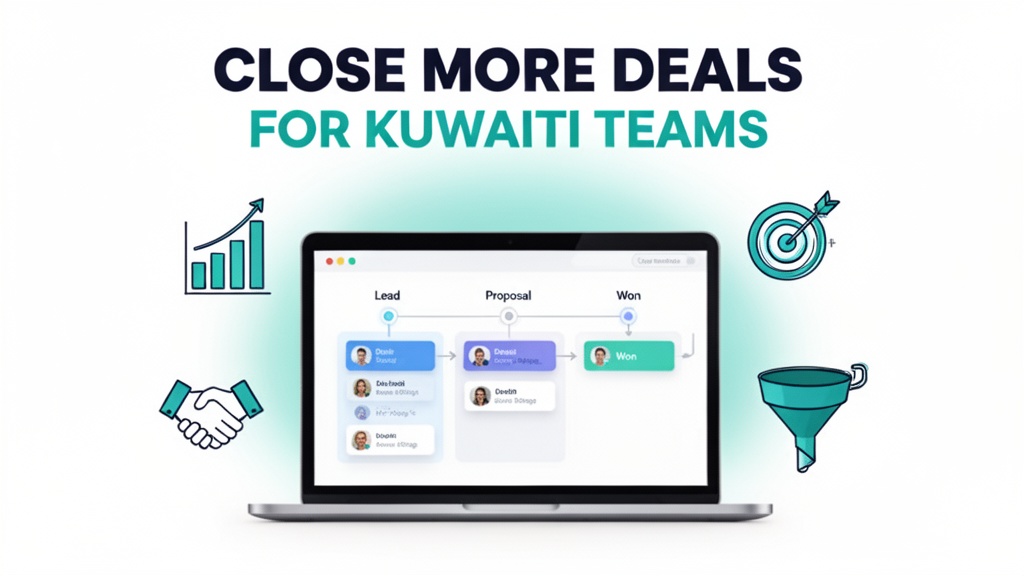
Visual pipelines provide a structured, visual view of the entire sales funnel. Each prospect is assigned to a specific stage—lead captured, qualified, proposal sent, negotiation, closed-won, or closed-lost. Team members can see exactly where each prospect stands, what actions are needed, and when follow-ups are due. This eliminates the confusion and uncertainty that leads to lost opportunities.
The financial impact is significant. A sales team of 15 representatives handling 50-60 leads per month can generate 5-8 new deals per month. If just one deal per month is lost due to poor lead management, that's 12-96 deals per year—representing substantial revenue that never materializes. Visual pipelines prevent this loss by making every lead visible and actionable.
What the System Actually Does
Ubisky's CRM system transforms how sales teams manage prospects with a visual, drag-and-drop sales pipeline. When a lead is captured through a website form, LinkedIn, or referral, the sales representative creates a new opportunity in the CRM. They assign a lead source, input contact details, and set the initial stage—typically "lead captured" or "new inquiry."
The lead appears in the sales pipeline, typically in the "Lead Capture" or "New" column. As the sales representative engages with the lead, they move the opportunity to subsequent stages: "qualified," "proposal sent," "negotiation," and finally "closed-won" or "closed-lost." Each stage represents a specific action that must occur before moving forward.
The visual nature of the pipeline makes it instantly clear where each opportunity stands. Team members can see at a glance which prospects are stuck in early stages, which are ready for proposal, and which are in closing discussions. The dashboard provides filtering and sorting options, so managers can focus on their specific responsibilities—whether that's pipeline health, individual performance, or overall sales forecasting.
Behind the visual interface, the CRM captures complete interaction history. Every email sent, phone call logged, WhatsApp message recorded, and meeting scheduled is documented with timestamps. The system automatically logs customer interactions, so sales representatives don't need to remember what they discussed or what actions were agreed upon. This historical context is essential when revisiting old opportunities.
Key Features With Real Use Cases
Lead Capture and Automated Scoring
A potential customer fills out a contact form on the company website, submitting their name, company, email, and industry. The form data populates the CRM with the new lead. The system automatically scores the lead based on predefined criteria: industry matches, company size, engagement level, and other factors. A score of 80-100 indicates a "hot" lead—ready for immediate follow-up. A score below 40 marks the lead as "cold" and less urgent.
Visual Sales Pipeline with Drag-and-Drop
The sales manager views the sales pipeline dashboard showing all active opportunities. She sees that three leads are stuck in "proposal sent" for over 14 days. She drags them into the "negotiation" column and sets follow-up reminders for this week. The system prompts the sales representative to follow up within 48 hours. The visual drag-and-drop interface makes it clear which opportunities need attention and which are on track.
Customer Interaction Timeline and History
The sales representative opens a prospect's timeline and sees the complete history: email sent on August 1st discussing pricing, phone call on August 3rd explaining features, WhatsApp message on August 7th confirming availability for demo. The next action scheduled is a demo call on August 10th at 2:00 PM. The system shows exactly what was discussed and what commitments were made, ensuring no context is lost between interactions.
Automated Follow-Up Reminders and Tasks
Every morning at 8:00 AM, the sales representative receives a notification with their follow-up tasks for the day. The list shows: "Follow up with KSA client about proposal response" and "Call UAE lead about demo scheduling." The system prioritizes tasks based on urgency and importance. The sales representative taps each task to log completed actions and schedule next steps. No more missed follow-ups due to forgotten reminders.
| Stat | Value |
|------|-------|
| Increase in deal closure | 30-40% |
| Missed follow-ups per week | 3-5 |
| Faster response times | 60-80% |
| Shorter sales cycles | 20-25% |
Local Market Context: Kuwait
Kuwait's business environment relies heavily on personal relationships and trust. B2B sales cycles in Kuwait typically involve multiple decision-makers, lengthy evaluation periods, and frequent face-to-face meetings. Sales representatives spend significant time building relationships with prospects before presenting solutions.
WhatsApp is the dominant communication channel in Kuwait for both personal and business interactions. According to Kuwait Telecom Company (Ooredoo) data, over 85% of Kuwaitis use WhatsApp daily for communication with businesses. Sales teams that integrate WhatsApp into their CRM workflow can send real-time updates, share documents, and maintain ongoing conversations with prospects without switching between apps.
The Kuwaiti business culture emphasizes direct communication and face-to-face interactions. However, when prospects are busy or geographically dispersed, digital communication becomes essential. The CRM system supports WhatsApp integration, allowing sales representatives to log WhatsApp conversations directly into the customer timeline. This ensures that important discussions captured in WhatsApp are not lost in the conversation history.
Kuwaiti companies are increasingly adopting cloud-based software solutions as digital transformation accelerates. Government initiatives and private sector investment have improved digital infrastructure across the country, with high internet penetration and smartphone adoption. Businesses that leverage digital tools for sales management demonstrate technological maturity and competitiveness in the marketplace.
During the hajj and Ramadan periods, business activity adjusts with religious and cultural considerations. Sales teams using the CRM system can pause follow-ups during major religious observances and resume automatically after the period ends. The system's scheduling features support these seasonal variations without disrupting the overall sales process.
How to Get Started
- Import existing customer and lead data from your spreadsheets or CRM system
- Book a 30-minute Ubisky demo and see the visual pipeline with your own sales data
- During the demo, test the lead scoring system with your criteria and watch automated prioritization
- Request a 14-day pilot with your sales team, focusing on tracking 20-30 active leads
- Compare conversion rates and deal closure times during the pilot against your previous month
> Book a free demo — we'll show you how Kuwaiti sales teams use our pipeline CRM to close 30% more deals in 6 months
Join 400+ businesses across GCC, Africa and South Asia already using Ubisky. Free 30-day trial — no credit card required.
Book a Free Demo | Explore CRM
Frequently Asked Questions
Can we customize the sales pipeline stages to match our sales process?
Yes. Ubisky allows complete customization of pipeline stages to match your specific sales process. You can add, remove, or rename stages, reorder them to reflect your workflow, and set criteria for moving leads between stages. The visual drag-and-drop interface supports all custom configurations, making it easy to adapt the system to your team's methodology.
Does the system integrate with our existing email and WhatsApp tools?
Ubisky integrates with Gmail, Outlook, and WhatsApp Business API. When you send emails or WhatsApp messages through these tools, the system automatically logs the interaction to the prospect's timeline. You can also send emails directly from within the CRM, with templates, attachments, and tracking enabled. This eliminates duplicate data entry and ensures complete conversation history.
How do we handle leads that are passed between team members?
When a lead is assigned to a different sales representative, the CRM automatically notifies the new owner and transfers all interaction history, tasks, and activities. The system maintains a complete audit trail showing who handled the lead at each stage. This prevents confusion, ensures continuity, and maintains transparency when leads are distributed across the team.
Can we generate forecasts based on pipeline data?
Yes. The CRM provides automated sales forecasting based on the weighted probability of each stage. You can set stage-specific close rates (e.g., "proposal sent" has a 40% close rate, "negotiation" has a 60% close rate) and the system calculates total pipeline value and expected revenue. The dashboard shows pipeline health, opportunity counts, and revenue forecasts by team member, region, and product line.
What happens to old data when we start using the system?
Ubisky imports all existing lead and customer data into the CRM, maintaining historical information. Closed deals remain accessible for reporting and analytics. The system supports data archiving for historical records and can export complete data in standard formats. This ensures you have a complete record of customer interactions and deal history for performance analysis and compliance purposes.
Closing
Sales teams in Kuwait operate in a competitive environment where relationships and follow-through determine success. Visual sales pipelines transform how teams manage prospects by making every interaction visible, every opportunity trackable, and every follow-up actionable. The 30-40% increase in deal closure rates, 60-80% faster response times, and 20-25% shorter sales cycles are not just metrics—they're the difference between sustained revenue growth and missed opportunities.
Kuwait's business landscape rewards those who demonstrate professionalism, reliability, and systematic approach to customer management. Digital tools like the Ubisky CRM don't replace the human element of sales—they enhance it. They give sales representatives more time to build relationships and fewer opportunities to miss follow-ups.
Start your 30-day free trial today and see how visual pipelines can transform your sales process. No credit card required.
See CRM System in Action
Join 400+ businesses across GCC, Africa & South Asia already using Ubisky.
Free 30-day trial — no credit card required.