It's 7:30 PM on a Friday in Riyadh. Your restaurant has 12 tables full. The service manager is standing at the pass, holding four order slips in her hand. Two of them are for the same table. One says "spicy" instead of "mild." Another has no drink order at all. The kitchen staff is shouting back order numbers, and you can feel the heat rising from both the grill and the front-of-house staff. A customer at table 4 is already waiting 25 minutes for their starter. This is the same routine every Friday night, and the order error rate is climbing.
The Hidden Cost of Paper Orders in Saudi Restaurants
Saudi Arabia's restaurant industry is growing faster than any other GCC market, with Riyadh alone adding over 2,500 new dining outlets between 2022 and 2025. But growth comes with a hidden problem: the reliance on paper order slips. When waiters write orders on paper and hand them to kitchen staff, mistakes happen. The order goes to the wrong station. The spice level is wrong. The kitchen staff can't read the handwriting. These errors don't just annoy customers — they cost money. A single wrong dish can result in a free meal, food waste, and a disappointed customer who might never return. With a 15-20% order error rate on paper slips, restaurants in Riyadh are losing an estimated 12-18% of their daily revenue to these mistakes. That's thousands of riyals evaporating every Friday night.
The real problem isn't just the mistake itself — it's the communication breakdown between front-of-house and kitchen staff. When orders are written on paper, there's no confirmation that the kitchen received the correct information. The waiter leaves the slip at the pass, and the chef cooks what's written. If there's any ambiguity, the customer ends up waiting longer for a corrected order, or worse, receiving food they didn't order at all. In a competitive market like Riyadh, where customers have dozens of restaurant choices within a 3-kilometer radius, a single error can drive them to a competitor who gets their order right the first time.
What the Restaurant POS Actually Does
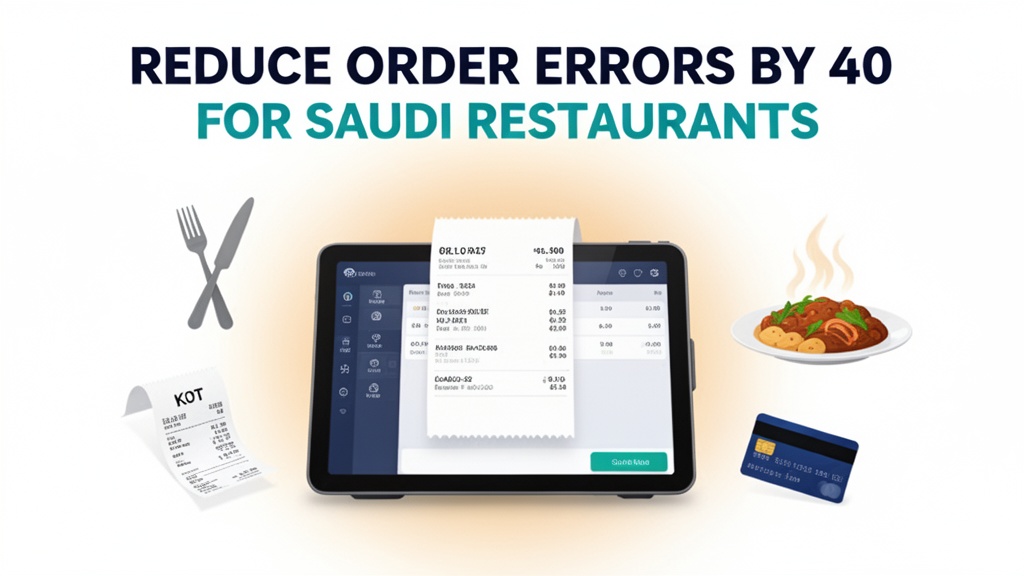
The Ubisky Restaurant POS System replaces paper order slips with a digital workflow that connects waiters, kitchen staff, and payment processing in real time. When a waiter selects a table on the restaurant's tablet or smartphone, the system opens a digital menu organized by category. The waiter selects dishes, adds customizations like spice levels or dietary requirements, and sends the order directly to the kitchen display system. No paper. No handwriting. No confusion. The kitchen staff sees the order on their display screens, sorted by station, with all details clearly visible. If a dish needs special preparation, they can add a note to the order before starting to cook. Once the order is ready, a simple tap marks it as complete, and the system updates the table status automatically.
The system also handles billing automatically. When a customer is ready to pay, the waiter can pull up their order history and apply any discounts or promotions stored in the system. Payment can be processed through multiple channels — cash, card, or mobile payment methods like Apple Pay or regional solutions integrated with the POS. The entire checkout process takes less than two minutes, even during peak hours. Meanwhile, the kitchen display system keeps track of all active orders, showing wait times and progress bars for each dish. This visibility prevents bottlenecks and helps kitchen staff prioritize orders based on their preparation times.
Key Features with Real Use Cases
Voice Order Input via Smartphone
Restaurant staff can use voice commands through the Ubisky app to take orders. A waiter stands at a table, speaks the order into their smartphone, and the system transcribes it into the digital order. For example, at a busy Friday dinner service, waiter Ahmed might say: "Table 7 — two Chicken Majboos with extra spice, one grilled mixed grill, and two cans of Saudi Cola." The system converts this into a structured order with all details captured automatically. This feature is especially valuable during peak hours when writing takes time and customers get impatient waiting for their orders. Voice ordering reduces order time by 30-40% compared to manual typing, and studies show that customers appreciate the faster service. The voice feature also ensures accurate transcription — no more missing dishes or wrong spice levels.
Automated Kitchen Display System
The kitchen display system (KDS) replaces physical order boards with digital screens in each cooking station. Each order appears on the appropriate screen based on station assignment — grill, fry, cold station, or preparation. The system shows the order number, table location, all items, customization notes, and a progress bar indicating how far along the order is in preparation. When the chef marks an item as ready, the progress bar updates and the order moves to the next station. This automated workflow eliminates the chaos of shouting order numbers and checking paper slips. Kitchen staff can see at a glance which orders are nearly complete and which are behind schedule. The system also alerts staff if an order is being prepared incorrectly or if there's a delay that could affect serving time.
Real-Time Table Status Tracking
The POS system maintains a live table map that updates in real time as orders move through the kitchen. When an order is placed, the table status changes to "Ordering." When the food is ready, it changes to "Ready" or "Served." Waiters can check the table map from their stations to see the status of all tables, reducing the need to walk around and ask, "Is your food ready yet?" This visibility improves table turnover during peak hours because waiters can serve tables that are ready while other tables are still ordering. The system also tracks how long customers have been waiting and can flag tables that have exceeded acceptable wait times, allowing managers to intervene and resolve issues proactively.
Automatic Order Routing to POS
The POS system automatically routes orders to the appropriate kitchen stations based on the type of food being ordered. If a customer orders a main dish, a starter, and a drink, the system splits the order across stations and shows all items on the respective screens. This routing prevents bottlenecks where one station is overwhelmed while another is idle. For example, if the grill station is preparing chicken and rice while the cold station is handling salads and drinks, the system balances the workload across stations. The routing is based on a predefined hierarchy that considers cooking times and staff expertise, ensuring that each station receives the orders it can handle most efficiently. This automation reduces wait times and improves overall kitchen throughput.
| Stat | Value |
|------|-------|
| Order error rate with paper slips | 15-20% |
| Error reduction with digital POS | 40-50% |
| Throughput increase with voice ordering | 25-30% |
Local Market Context: Saudi Arabia
Saudi Arabia's restaurant market has undergone a dramatic transformation over the past decade. The country's Vision 2030 initiative has opened new dining opportunities in entertainment venues, shopping malls, and tourist attractions. However, this growth has also increased competition, with over 8,000 restaurants operating across the Kingdom. In Riyadh alone, the density of dining options means that customers have more choices than ever, and they are less forgiving of errors. Digital ordering systems are becoming increasingly common in high-end restaurants and hotel establishments, but many local restaurants still rely on paper-based systems that are struggling to keep up with the pace of modern dining.
Payment methods in Saudi Arabia have evolved rapidly. While cash remains common, digital payments have gained significant traction. The ability to integrate with local payment processors and support Saudi Arabian currency (SAR) is essential for restaurants targeting the local market. The Ubisky POS supports multiple payment options, including credit cards, mobile payments, and cash handling with easy reconciliation. This flexibility is crucial for restaurants that serve a mix of dine-in, takeout, and delivery customers, all of whom may have different payment preferences. Additionally, the system's reporting features help restaurant owners track which payment methods are most popular, allowing them to optimize their payment infrastructure accordingly.
How to Get Started
- Import your current menu into the Ubisky system with dish names, prices, categories, and preparation times
- Set up your kitchen display screens and configure station routing based on your kitchen layout
- Train your waitstaff to use voice ordering and the digital table map during your next shift
- During a slow service, test the system with your own orders to ensure accuracy
- After 30 days, compare your order error rate and customer wait times with your previous paper-based process
> Book a free demo — we'll show you how Saudi restaurants use Ubisky to cut kitchen mistakes and increase customer satisfaction
> Join 400+ businesses across GCC, Africa and South Asia already using Ubisky. Free 30-day trial — no credit card required.
> Book a Free Demo | Explore Restaurant POS System
Frequently Asked Questions
Can Ubisky handle bilingual ordering for Arabic-speaking and English-speaking customers?
Yes. The system supports Arabic and English interfaces, and waiters can switch between languages instantly. Orders can include both Arabic and English dish names, and the kitchen display system shows details in the language selected by the staff member taking the order. This flexibility ensures that both Arabic-speaking and English-speaking customers receive accurate orders.
Does the restaurant POS integrate with delivery platforms like Talabat or HungerStation?
The system includes integrations with major regional delivery platforms. Once configured, orders placed through delivery apps automatically appear in the Ubisky kitchen display system with all delivery details — drop-off address, customer notes, and payment information. This integration eliminates the need to manually copy orders and reduces errors that commonly occur when transferring information between platforms and in-house systems.
What happens to customer data and order history if we switch from another POS system?
Ubisky offers data migration services to transfer customer details, menu items, order history, and supplier information from your existing system. During a 30-day pilot period, you can test the system with real orders while we simultaneously migrate your historical data. This transition is painless for customers because their order history and preferences are preserved, allowing for personalized recommendations and smoother checkout experiences.
Can we use the restaurant POS for multiple restaurant locations from a single account?
Yes. The system supports multi-location management with separate kitchens and staff accounts for each location. A single administrator can oversee all restaurants from a central dashboard, while location-specific staff manage orders, billing, and inventory at their restaurant. Each location has its own menu, pricing, and staff permissions, but the system provides cross-location analytics and consolidated reporting for owners with multiple outlets.
How does the system handle special requests like dietary restrictions or food allergies?
The POS system allows staff to add detailed notes to any order, including dietary restrictions, allergies, and preparation preferences. These notes appear prominently on the kitchen display system with clear visual indicators — for example, a green checkmark for "No peanuts" or a red star for "Contains gluten." Kitchen staff must acknowledge each special request before marking an item as ready, ensuring that the customer's requirements are met. The system also flags allergen information in the digital menu, so staff can proactively ask about allergies when taking orders.
Automating Riyadh's restaurants one order at a time
Digital ordering isn't just about reducing errors — it's about giving customers the fast, accurate service they expect in Saudi Arabia's competitive dining landscape. When your kitchen staff sees orders clearly on their screens instead of struggling to read paper slips, and when your waiters can use voice commands to take orders quickly, everyone benefits. Customers get their food faster and correctly. Staff spend less time correcting mistakes and more time providing excellent service. And you get lower food waste, higher customer satisfaction, and more revenue. Ubisky's Restaurant POS system is designed for Saudi restaurants — it handles local payment methods, supports bilingual interfaces, and integrates with delivery platforms that your customers actually use.
Ready to reduce your order errors by 40%? Book a free demo and see how your restaurant can transform its ordering process.
See Restaurant POS System in Action
Join 400+ businesses across GCC, Africa & South Asia already using Ubisky.
Free 30-day trial — no credit card required.