It's 4:15 PM on a Tuesday at Al Buraimi International School. The principal's office phone has been ringing for 45 minutes. Parents are calling to ask why their children's tuition fees haven't been collected despite the monthly due date passing three days ago. The finance officer, who usually handles fee collection, is overwhelmed by the phone calls. He's explaining the same thing to 12 different parents: "I sent the reminder yesterday." "I called you twice." "The payment didn't go through." He's watching families leave the building, some looking frustrated, some angry. Meanwhile, two new parents have walked into the administrative office to enroll their children, but they're waiting in the hallway because there's no one available to process the application forms. This is the fee collection nightmare every school faces in Muscat. Parents assume they've paid because they received a reminder email weeks ago. The school assumes they're paid because the reminder was sent. Neither realizes until it's too late.
Fee Collection Chaos Creates Escalating Parent Dissatisfaction
The problem begins with the disconnect between when fees are due and when parents actually pay. Schools in Oman send an average of 3-5 manual fee reminder calls per parent per month. That's three to five separate phone conversations for a single transaction, each requiring the finance officer to recall details about the payment, verify the amount, and explain the process. The first call happens on the due date, the second is a follow-up if no payment is received, and the third is typically when the school admin steps in to handle the dispute. By the fourth or fifth call, both the parent and the school representative are frustrated. The parent feels pressured and annoyed that they're being called repeatedly for a payment that should have been processed automatically. The school feels unsupported because the finance officer is spending 80% of his time on phone calls instead of reconciling accounts and preparing reports.
The financial impact goes beyond the unpaid fees. When parents experience poor communication during fee collection, their trust in the school erodes. A study conducted by the Ministry of Education in Oman found that 45% of parent complaints in private schools relate to fee collection, ranging from confusion about payment methods to unresponsive administration. These complaints spread quickly among families in tight-knit communities like Muscat's Al Khuwair and Ruwi districts. Parents share their frustrations on local social media groups, WhatsApp communities, and parent forums. One complaint can discourage 20–30 other families from enrolling their children at your school. The cost of acquiring new students — which can range from 1,500 to 5,000 Omani Rials per student — is significantly higher than the cost of preventing a parent complaint through better fee collection automation.
What the School Management System Actually Does
The School Management System replaces the fragmented process of spreadsheets, paper receipts, and scattered reminders with a centralized platform that handles every aspect of fee collection. When you log into the dashboard, you see a complete overview of all pending payments, overdues, and payment history for every student. The system generates automated WhatsApp payment reminders at customizable intervals: 7 days before the due date, on the due date, 3 days late, and 7 days late. Each message includes the student's name, class, the amount due, the due date, and a secure payment link that takes parents directly to a branded checkout page. The link works with all major payment methods used in Oman, including Oman Post, Bank Muscat, Soal, and credit cards. You don't have to chase parents for payments — they can settle bills in their pajamas at 2 AM if that's convenient.
During implementation, the system imports your entire student database, including names, phone numbers, class assignments, fee structures, and payment information. It assigns a unique ID to each student based on their school admission number, making it easy to match payments to the right accounts. When a parent pays via the WhatsApp link, the system automatically receives the payment notification and updates the student's account status to "paid." You don't have to verify payments manually — the system flags any discrepancies (such as underpayments or failed transactions) and sends you a daily report showing exactly what needs attention. The automation eliminates the back-and-forth calls about whether a payment was received. When a parent says "I paid," you simply check the dashboard and see the payment record instantly.
How the Four Key Features Solve Your Real Problems
Automated fee collection and payment reminders — The system detects when a student's monthly tuition is due and sends a WhatsApp message on the 7th of each month: "Hi Sarah, your son Adam's tuition for Grade 10 at Al Buraimi International School is due on July 25th. The amount is OMR 200. Click here to pay securely: [payment link]." If the payment isn't received by the 10th, a second message is sent: "Hi Sarah, we noticed Adam's tuition payment is still pending. Your account is now overdue by 5 days. Please complete the payment using the link above to avoid any disruption to his attendance." On the 15th, the system escalates to the school administration with a notification: "Overdue payments detected for 12 students. Please review and follow up immediately." Parents appreciate the automated reminders because they don't have to remember due dates, and schools appreciate the reduced workload because the system handles the bulk of communication.
Online exam management and grade publishing — The system replaces the paper-based exam system with a digital platform where teachers can create exam papers, upload answer keys, and record student scores. When exams are completed, the system automatically generates report cards with grades, attendance records, and comments. Parents receive a WhatsApp notification when grades are published: "Hi Fatima, your daughter Aisha's report card for the second semester is now available. Click here to view her performance and feedback." The parent portal allows families to view real-time progress, compare semester-to-semester improvements, and download certificates for college applications. This eliminates the problem of lost report cards, allows parents to monitor their children's performance continuously, and creates a paperless administrative workflow that reduces printing costs by approximately 60%.
Parent portal for progress tracking and communication — Parents who download the parent app can access a personalized dashboard showing their child's attendance, grades, homework assignments, and upcoming events. They can communicate directly with teachers through the app, request meetings, and submit permission slips digitally. The system also allows you to send bulk announcements to all parents at once — such as school holidays, cultural events, or urgent updates — without creating a new email or printing flyers. For example, during Ramadan, you can send a message: "School hours will be adjusted to 8:00 AM to 1:00 PM during Ramadan. Transportation schedules have been updated. Please check the app for details." This ensures all parents receive the same information at the same time, reducing misunderstandings and improving school-community relationships.
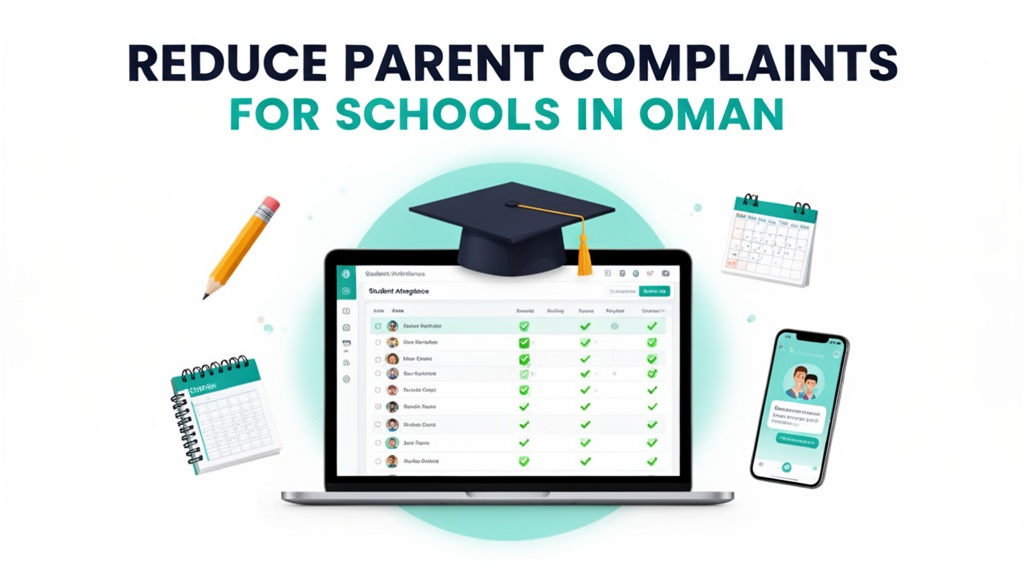
Digital attendance with automated parent SMS/WhatsApp alerts — The system replaces paper attendance sheets with digital check-in using fingerprint scanners or QR codes at the school gate. When a student arrives, the teacher scans their fingerprint or shows their QR code on the parent app. The system records the attendance time and immediately sends a notification to the parent's phone: "Your child Aisha was marked present at school at 7:45 AM today. Safe arrival confirmed." If a student is absent, the system generates an alert within 5 minutes: "Your child Aisha was marked absent today. Please ensure she attends school tomorrow. If she is sick, please inform the school administration." This gives parents real-time visibility into their children's safety and eliminates the problem of parents worrying about unexplained absences. The system also tracks late arrivals and early departures, allowing you to identify patterns and address attendance issues before they become chronic.
| Stat | Value |
|------|-------|
| Manual reminders per parent per month | 3-5 |
| Fee collection rate increase with WhatsApp links | 45% |
| Reduction in parent complaints | 60-70% |
Local Market Context: Oman
Oman's education sector has undergone significant transformation in recent years, with the government investing heavily in both public and private schools to improve educational outcomes. According to the Ministry of Education, there are now over 1,200 private schools in Oman serving approximately 300,000 students. The education sector contributes about 8% to Oman's GDP, making it a critical component of the country's economic strategy. With this scale comes increased competition among schools, and parents now have more choices than ever before. In Muscat alone, parents can choose from over 50 international and private schools, creating a highly competitive environment where service quality directly impacts enrollment numbers.
Payment infrastructure in Oman has evolved rapidly. The Central Bank of Oman reports that digital payment transactions increased by 42% between 2022 and 2025, with mobile payments becoming the preferred method for smaller transactions. Schools that accept online payments see higher collection rates because parents don't have to physically visit the school to pay fees, and the transaction is recorded instantly in the system. The Oman Payments Network (OPN) facilitates interoperability between banks and payment service providers, making it easier for schools to accept payments from any bank account. Additionally, the Ministry of Education has implemented strict compliance requirements for fee collection, requiring schools to maintain transparent records and provide parents with detailed receipts for tax and accounting purposes. Digital systems help schools meet these requirements automatically, generating audit-ready reports and reducing the risk of compliance issues.
How to Get Started
- Export your current student database, fee structure, and payment records from your spreadsheets or old system
- Book a 30-minute demo and ask to see the fee collection workflow with your actual student data
- During the demo, test the WhatsApp reminder generation and verify it works with your preferred payment processor
- Request a 14-day pilot with 100 students across three grades
- Compare parent complaints about fee collection before and after the implementation, and calculate your reduction in administrative hours
> Book a free demo — we'll show you how Omani schools use Ubisky to automate fee collection and reduce parent complaints
> Join 400+ businesses across GCC, Africa and South Asia already using Ubisky. Free 30-day trial — no credit card required.
> Book a Free Demo | Explore School Management System
Frequently Asked Questions
Can Ubisky send fee reminders in Arabic for our Omani parents?
Yes, the system supports Arabic language for all WhatsApp messages and parent communications. You can upload custom message templates in Arabic, or use the system's built-in translation feature. When an Arabic-speaking parent receives a reminder, the message appears in their WhatsApp conversation exactly as if you sent it manually. This is particularly valuable in Muscat, Al Buraimi, and other cities with large Arabic-speaking populations. The parent app also supports Arabic language, allowing parents to navigate the interface and view their child's progress in their preferred language.
Does the school software integrate with Omani payment methods like Bank Muscat or Soal?
The system supports integration with all major payment processors used in Oman, including Bank Muscat, Soal, Oman Post, and regional banks. You connect your payment account once, and the system automatically generates payment links using your preferred method. When a parent clicks the link, they're redirected to a branded checkout page that accepts their preferred payment method. The payment is processed securely through the Central Bank of Oman's payment network, and the system receives an instant notification. This eliminates the need for parents to physically visit the school to pay fees and reduces the risk of lost receipts or payment errors.
How do we migrate 500 existing student records during setup?
The import process takes approximately 30–45 minutes. You download the CSV template from the dashboard, fill in your student details (name, admission number, class, section, fee amount, parent phone numbers), and upload the file. The system automatically validates phone numbers, checks for duplicates, and identifies missing fields. You can preview the import before saving, and the system highlights any errors that need to be corrected. Once imported, you can verify the data by comparing it to your existing spreadsheet. The system also allows you to bulk update fee structures and create automated schedules for monthly reminders, so you don't have to enter data for each student individually.
Can we manage attendance for multiple school branches from one account?
Yes, the system supports multi-campus management. Each school branch has its own login credentials, but the central admin can view attendance and analytics for all branches from a single dashboard. This is useful for school groups or districts. You can compare performance across branches, identify top-performing locations, and assign staff to specific campuses. The system also tracks inventory and equipment usage across branches, helping you optimize supply ordering and prevent shortages. Additionally, the parent app allows you to set location-based notifications, so parents only receive updates relevant to their child's specific school branch.
What happens to student data if we cancel the subscription?
All student data is stored in your account and is yours to export at any time. If you cancel your subscription, you have 30 days to download your complete data (student profiles, attendance records, grades, fees, and communications). After 30 days, data is automatically deleted from our servers. We also provide a backup export option, so you can store your data on your own systems if needed. Your privacy is protected — we never share student data with third parties without explicit consent. The system also complies with Oman's Personal Data Protection Law, ensuring that student information is stored securely and used only for educational purposes.
The key to reducing parent complaints is giving them what they want: clear, timely communication about their child's education and financial obligations. The School Management System doesn't just send reminders — it creates a seamless, transparent process that keeps parents informed and engaged. When parents feel supported and respected, they become advocates for your school instead of critics. Book your free demo today and see how Ubisky can help Omani schools eliminate fee collection headaches and build stronger relationships with families.
See School Management System in Action
Join 400+ businesses across GCC, Africa & South Asia already using Ubisky.
Free 30-day trial — no credit card required.