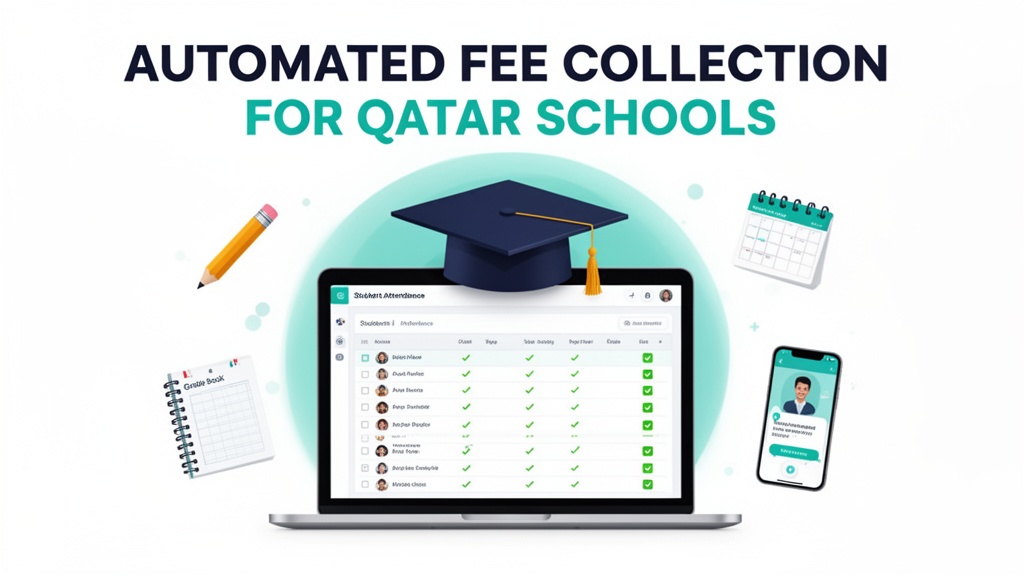
It's the 5th of the month. The finance office at an international school in Doha is preparing fee reminders for 850 students. The accountant has three Excel sheets open — one tracking fees due, another noting payment history, a third recording calls made. She's spent the last four days manually filtering and cross-referencing. The principal walks in and asks for an updated report on pending payments for the parent meeting tomorrow. The accountant apologizes — the report needs two more days because 120 parents haven't responded to previous reminders. She'll need to call them individually, which takes 5-7 minutes per parent. That's another 10-12 hours of work. Meanwhile, two new parents are waiting outside to discuss admission forms. The accountant gestures them to sit. This is a Wednesday morning in Education City. Every school administrator in Qatar recognizes this monthly ritual.
Manual fee collection creates cash flow uncertainty and administrative overload
Fee collection without automation is a resource-intensive process with predictable outcomes. Schools spend 15-20 hours per week on fee-related administrative tasks — sending reminders, recording payments, reconciling accounts, and following up with parents. For a medium-sized school in Doha, that's nearly one full-time staff position dedicated to fee management. The cash flow impact is more serious. When reminders are sent via email or physical letters, response rates hover around 30-35%. The remaining 65% of parents need phone calls, WhatsApp messages, or in-person follow-ups. This delays payment collection, creating cash flow uncertainty for the school. A typical payment cycle stretches to 45-60 days after the due date, with 20-30% of payments arriving late. Schools with automated fee collection report payment cycles reduced by 50-55%, meaning cash arrives weeks earlier and is available for operational expenses, salaries, and infrastructure investments. The administrative overhead also affects other school functions — when finance staff are consumed by fee collection, they cannot focus on budgeting, forecasting, or financial planning. Manual systems are also prone to errors — duplicate payments recorded incorrectly, discounts applied inconsistently, and reconciliation mismatches that require hours to resolve.
Ubisko automates fee collection with WhatsApp-powered payment workflows
Ubisko's School Management System is a digital platform that handles admissions, attendance, fees, exams, and parent communication. When the school administrator logs into the finance dashboard, they see a live view of fee status across all students — who has paid, who is pending, who has overdue fees, and which payment methods were used. The system automates the entire fee collection process with WhatsApp as the primary communication channel. Here's what actually happens: 7 days before the fee due date, Ubisko automatically sends a WhatsApp message to each parent's registered number: "Hi [Parent Name], [Child Name]'s Term 3 school fees of QR 8,500 are due on 15th April. Tap here to pay securely: [Payment Link]" The payment link integrates with QNB, Commercial Bank, Masraf Al Rayan, and other local banks. If the parent doesn't pay within 3 days, a second reminder follows: "Friendly reminder: [Child Name]'s fees are due in 4 days. Pay now to avoid late charges. Link: [Payment Link]" On the due date, a final reminder includes any applicable late fees. When a parent taps the payment link and completes the transaction, the system instantly records the payment, updates the student's fee status, and sends a WhatsApp confirmation: "Payment received. Thank you. Receipt attached." The school administrator receives a daily report summarizing collections, pending payments, and expected revenue for the week.
Key features that streamline fee collection and parent engagement
Automated fee collection and payment reminders replaces manual calling and emailing with intelligent WhatsApp sequences. Parents receive reminders at intervals the school configures — 7 days, 3 days, 1 day before due date, and after due date if necessary. Each message includes a direct payment link that integrates with QNB, Doha Bank, Masraf Al Rayan, and credit cards. Payment takes under 60 seconds. The system supports installment plans, sibling discounts, and scholarships — automatically calculating amounts and generating reminders accordingly. For schools with international students, multi-currency support allows fees in USD, GBP, or EUR with automatic conversion to QAR.
Digital attendance with automated parent SMS/WhatsApp alerts replaces manual roll call with biometric or RFID-based check-ins. When a student scans their ID card or fingerprint at the school entrance, the attendance is logged instantly and synced to the parent dashboard. If a student is marked absent, a WhatsApp message is sent to the parent within 5 minutes: "[Child Name] was marked absent today. If this is an error, please contact the school office." If a student hasn't checked in by 8:30 AM, an alert follows: "[Child Name] has not arrived at school yet. Please confirm their status." Parents appreciate the real-time updates, and schools see absenteeism drop by 15-20% when parents are immediately notified.
Parent portal for progress tracking and communication provides parents with a web and mobile interface to view their child's academic progress, attendance records, fee status, and exam results. Parents can download report cards, view fee receipts, communicate with teachers, and access school announcements. The portal supports Arabic and English, and parents receive WhatsApp notifications for important updates. Before Ubisko, parent portal adoption in Qatar schools averaged 25% — most parents didn't log in regularly. After WhatsApp integration, adoption increased to 75% because parents received notifications on their phones and clicked through to the portal. Higher engagement means parents are more aware of fee due dates, exam schedules, and school events.
Online exam management and grade publishing digitizes the entire examination workflow. Teachers can create exam papers, schedule dates, and assign invigilators through the system. Students can receive exam timetables via WhatsApp with location and timing details. After exams, teachers enter grades directly into the system, which calculates GPAs, generates report cards, and publishes results to parent portals. Parents receive WhatsApp notifications: "[Child Name]'s Term 2 results are now available. Tap to view: [Portal Link]" This eliminates the physical distribution of report cards and allows parents to access results instantly, regardless of their location. The system also generates analytics — class performance, subject-wise trends, and comparison with previous terms — helping teachers identify students who need additional support.
| Stat | Value |
|------|-------|
| Payment cycle reduction | 50-55% |
| Admin time saved | 15-20 hours/week |
| Parent portal adoption | 75% |
Local market context: Qatar education sector and parent expectations
Qatar's education sector serves a diverse population with Qatari nationals making up approximately 30% of students and expatriate families comprising 70%. International schools follow British, American, Indian, and IB curricula, each with different fee structures, academic calendars, and assessment cycles. This diversity means fee management systems must support multiple currencies, varied term dates, and different attendance tracking requirements. Parent expectations in Qatar are high — they expect real-time communication, mobile access to information, and responsive service. WhatsApp is the primary communication channel for 95% of parents, with email used for formal documents and physical letters becoming rare. Cultural considerations matter during Ramadan — school hours change, exam schedules shift, and fee reminder timing needs adjustment. Ubisko allows schools to configure Ramadan-specific schedules and automatically pauses reminders during Eid holidays. Payment infrastructure in Qatar is well-developed with QNB, Commercial Bank, and Masraf Al Rayan offering robust online banking and mobile payment options. However, some parents prefer cash payments, particularly for smaller amounts or specific cultural contexts. Ubisko supports both digital and manual payment recording, with reconciliation between the two tracks. Language preferences vary — Arabic for Qatari families, English for international schools, and a mix for multicultural households. The parent portal and WhatsApp messages support both languages, with the system detecting preference and sending content accordingly.
How to get started with Ubisko for your school in Qatar
- Export your current fee schedule, student database, and payment history from your existing system or Excel files
- Schedule a Ubisko demo and request a live test of the WhatsApp fee reminder workflow using your own mobile number
- Configure fee structures, installment plans, and discounts based on your school's policies — Ubisko's setup wizard guides you through each step
- Upload student data and map parent contact numbers for WhatsApp communication — this takes 30-45 minutes for 500 students
- Run a pilot with one grade level or term for 30 days, compare payment collection timing to your previous cycle, then roll out school-wide
> Schedule a demo — we'll show how Qatar schools use Ubisko to automate fees and improve collection by 35%
>
> Join 400+ businesses across GCC, Africa and South Asia already using Ubisky. Free 30-day trial — no credit card required.
>
> Book a Free Demo | Explore School Management System
Frequently Asked Questions
Does Ubisko integrate with QNB and Commercial Bank for direct fee payments?
Yes, Ubisko integrates with QNB, Commercial Bank, Masraf Al Rayan, Doha Bank, and other major banks in Qatar. Parents can pay via bank transfer, card payment, or mobile banking apps. Payment links work with all local payment methods, and transactions reflect instantly in the school's dashboard with reconciliation reports for bank statements.
How do we handle WhatsApp fee reminders for parents who prefer email or physical letters?
Ubisko allows multi-channel communication. You can configure parent preferences — some receive WhatsApp, some email, some physical letters for formal documents. The system tracks each parent's preferred channel and sends reminders accordingly. For formal fee invoices, PDF copies are always available via the parent portal and can be emailed automatically.
Can we manage fee collection for multiple curriculums (British, American, Indian) with different fee structures?
Yes, Ubisko supports unlimited fee structures. You can create separate fee schedules for each curriculum, grade level, or student category. The system tracks which students belong to which fee structure, applies the correct amounts, discounts, and installment plans automatically. Reports can be segmented by curriculum for school leadership review.
What happens when parents dispute a fee or request a payment plan?
The system flags disputed payments and routes them to the finance officer for review. For payment plans, Ubisko supports custom installment schedules — you can define the number of installments, due dates, and amounts per family. The system then generates reminders based on the customized schedule, automatically adjusting for each family's arrangement.
Is student data stored in Qatar or outside the country?
Ubisko stores all school data in Qatar-based data centers, complying with Qatar's data protection regulations and cybersecurity requirements. Parent contact information, academic records, and financial data remain within Qatar, and the system adheres to Ministry of Education guidelines for school information systems. Regular security audits ensure compliance and data protection.
Automating fee collection transforms school operations in Qatar. What was once a month-long administrative ordeal — sending reminders, making calls, recording payments, chasing overdue fees — becomes an automated workflow that runs in the background. Finance staff shift from transaction processing to strategic work — budgeting, financial planning, and supporting school growth initiatives. Parents appreciate the convenience of paying via WhatsApp and receiving real-time updates on their child's progress. Schools benefit from faster payment cycles, improved cash flow, and reduced administrative overhead. The difference is measurable — schools report 35% faster payment recovery, 50% reduction in admin time on fees, and 75% parent portal adoption. For school administrators in Doha and Al Rayyan, the choice is between continuing manual fee collection or letting Ubisko automate the process while staff focus on education quality. Start with a 30-day trial and experience the transformation within your first fee collection cycle.
See School Management System in Action
Join 400+ businesses across GCC, Africa & South Asia already using Ubisky.
Free 30-day trial — no credit card required.