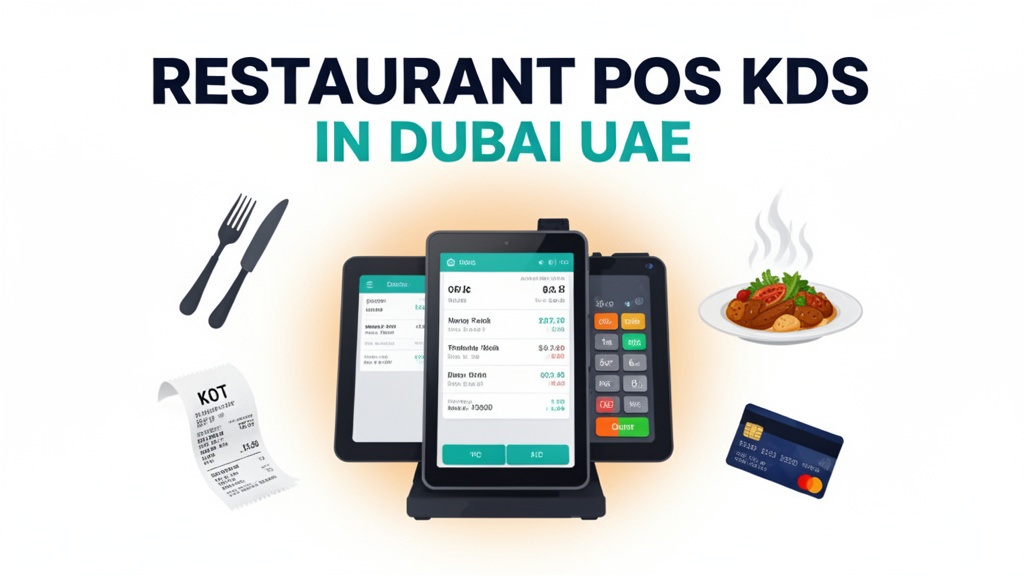
It's 7:30 PM on a Friday at Downtown Dubai restaurant. The dining room is packed with 60 customers ordering for their families. The waiter at table 12 taps the order into the POS system, and instantly it appears on the kitchen display screen behind the chef. There are no printed tickets, no chance for mix-ups, and no shouting across the kitchen. In less than 30 seconds, the kitchen has received the order and started preparation. By 8:00 PM, table 12 is enjoying their meal. At the end of the night, food waste is 25% lower than last month, and the kitchen staff have finished all orders by 10:30 PM instead of running until midnight.
How Order Errors Destroy Restaurant Profitability
Order errors between front-of-house and kitchen staff are destroying restaurant profitability across Dubai and the UAE. When waiters write orders on paper tickets that get misplaced, or when orders are taken verbally and misheard, the result is kitchen tickets with wrong dishes, missing ingredients, or incorrect preparation instructions. These errors lead to food waste, customer complaints, and increased labor costs as kitchen staff must remake orders multiple times.
The financial impact is substantial. Restaurants with manual order entry have a 12-15% error rate compared to 2-3% with digital systems. For a Dubai restaurant with average ticket value of AED 150 and 150 customers per day, that 10% error rate difference represents AED 2,250 in revenue lost every day to wasted food and rework. Over a month, that's AED 67,500 — enough to lose a good employee or cover several months of rent.
Order errors also damage customer relationships. When a customer receives the wrong dish, they may send it back, which creates stress for the kitchen and a poor experience for the customer. Even if the customer doesn't complain directly, they're less likely to return to a restaurant where their experience was flawed. In Dubai's competitive hospitality market, losing even 5% of customers due to service errors can have a significant impact on long-term profitability.
Inventory waste is another major consequence. Kitchen staff often order ingredients based on perceived demand, not actual orders. When orders come in with modifications, cancellations, or errors, ingredients that were prepared go unused and eventually become waste. This waste costs money and increases food cost percentages, which directly impacts profit margins. For restaurants operating on thin margins, even small increases in food waste can push operations into the red.
The UAE restaurant sector is growing at 7-9% annually as the country's tourism and business sectors expand. With increased competition and rising operating costs, Dubai restaurants cannot afford inefficiencies. The adoption of digital POS systems is accelerating as restaurant owners recognize that manual processes are no longer sustainable in a market where customers expect speed, accuracy, and consistency.
What the Restaurant POS System Actually Does
Ubisky's Restaurant POS System replaces paper tickets and verbal order transmission with a completely digital workflow that connects ordering, kitchen preparation, and billing into a single streamlined process. When a waiter enters an order in the POS system, it instantly appears on the kitchen display screen, ready for the chef to begin preparation.
Here's what actually happens when a staff member uses the system:
- A customer orders at the table, and the waiter taps the order into the POS system
- The order is immediately transmitted to the kitchen display screen, showing the table number, customer name, and detailed order items with modifications
- Each order item is automatically added to the kitchen's real-time preparation queue
- The kitchen staff sees orders grouped by preparation time, starting with the first order at the top of the queue
- As items are completed, they are marked as "done" on the display screen
- When the first dish is ready, a kitchen screen alerts the runner who delivers it to the table
- The system automatically applies appropriate discounts, modifiers, and taxes based on your restaurant's configuration
- At the end of the meal, the bill is generated instantly, and the customer can pay through multiple options: cash, card, or digital payments
The system also handles table management and reservations. You can assign tables to specific servers, track table turnover rates, and manage reservations through an integrated calendar. The system shows you real-time occupancy, so you can guide customers to available tables or adjust reservations based on current demand. This reduces the time customers spend waiting for a table and optimizes seating efficiency.
Key Features with Real Use Cases
Digital Order Taking with Kitchen Display System
Orders are entered digitally at the point of service and transmitted instantly to the kitchen. The kitchen display system shows orders with table numbers, customer names, and detailed item breakdowns including modifications. This eliminates the need for printed tickets that can be lost, crumpled, or misread. Each order appears on the screen exactly as entered, with no transcription errors. Waiters can see the status of each order in real-time, knowing exactly when items will be ready and when to start preparing the next course. This synchronization reduces order errors by 30-40% and improves kitchen workflow efficiency by 20-25%.
Automated Inventory Tracking and Low-Stock Alerts
The system tracks ingredient inventory automatically, recording usage based on orders prepared. When ingredients fall below your configured minimum levels, the system sends an alert to staff, prompting reordering. This prevents stockouts that would force you to tell customers items aren't available, and it reduces overstocking that leads to waste. The system can also track expiration dates and recommend first-in-first-out usage. For a Dubai restaurant that prepares its own sauces and garnishes, this feature alone can reduce food waste by 15-20% annually.
Fast Billing with Multiple Payment Options
Bills are generated instantly with no manual data entry. The system applies all applicable taxes, discounts, and gratuities based on your restaurant's configuration. Customers can pay through cash, card, or digital payment methods, with payment confirmation appearing on the POS screen and transmitted to the kitchen for order completion tracking. The system integrates with payment terminals and digital payment gateways, ensuring secure transactions and instant revenue recognition. Fast checkout reduces wait times during peak hours and improves the customer experience.
Daily Sales and Margin Analytics
The system provides comprehensive reporting on daily sales, by menu category, by server, by table, and by time period. You can view sales data broken down by product margin, identify high-margin items that should be promoted, and spot slow-moving items that may need discounting or removal from the menu. The system also tracks table turnover rates, server efficiency, and peak hours. These insights help you make data-driven decisions about pricing, menu design, staffing levels, and operational procedures.
| Stat | Value |
|------|-------|
| Reduction in food waste | 25% |
| UAE restaurant sector growth | 7-9% |
| Error rate with manual vs digital orders | 12-15% → 2-3% |
Local Market Context: UAE
The UAE restaurant sector is growing at 7-9% annually as the country attracts more tourists, businesses, and residents. Dubai in particular has become a global food destination with thousands of restaurants competing for customers. This competitive environment demands operational excellence and customer experience that rivals the world's best hospitality markets.
Payment infrastructure in the UAE is highly developed, with widespread adoption of digital payment methods. Cash is still used, but digital payments including Apple Pay, Google Pay, and card payments are increasingly preferred by customers. Ubisky integrates with multiple payment gateways and supports digital payment methods, ensuring your restaurant can accept payments the way customers expect. The system generates detailed transaction records that simplify accounting and reconciliation.
Cultural factors influence dining patterns and service expectations. Dubai has a diverse population with preferences ranging from traditional Arabic cuisine to international fine dining. Many customers expect fast, efficient service with minimal friction between ordering and payment. The shift to digital ordering systems aligns with these expectations, allowing customers to order quickly and pay instantly without waiting for manual billing.
The COVID-19 pandemic accelerated digital adoption across all sectors, including hospitality. Dubai restaurants have rapidly embraced digital ordering and contactless payment to reduce physical interaction. Many customers now prefer ordering through mobile apps or at self-service kiosks to minimize contact. Restaurants that don't offer digital ordering options risk losing customers to competitors who provide faster, more convenient experiences.
How to Get Started
- Book a demo that includes the kitchen display system workflow with a realistic restaurant scenario
- Ask to see how the system handles complex orders with modifications and special requests
- During the demo, test the inventory tracking feature by adding items and checking low-stock alerts
- Request a 14-day pilot focusing on one service period (e.g., dinner service) with 200-300 covers
- Compare food waste reports before and after implementation, tracking reduction in waste categories
> Get a free demo — discover how Dubai restaurants use Ubisky's KDS to reduce waste and improve service speed
> Join 400+ businesses across GCC, Africa and South Asia already using Ubisky. Free 30-day trial — no credit card required.
>
> Book a Free Demo | Explore Restaurant POS
Does the restaurant software support Arabic language for customers?
Yes, Ubisky supports Arabic language for all customer-facing features including menus, billing, and payment interfaces. You can configure the system to display Arabic menus with detailed descriptions of dishes, ingredients, and dietary information. The system also supports Arabic language communication with customers through integrated messaging systems. For restaurants in Dubai's multicultural environment, this feature ensures you can serve Arabic-speaking customers effectively while maintaining service quality.
Can the system handle orders from multiple restaurants in one account?
Yes, Ubisky supports multi-location management for restaurant chains. You can create separate locations for each restaurant, each with its own menu, pricing, and operational settings. The system provides consolidated reporting across all locations, allowing you to track performance metrics, revenue, and menu performance across your restaurant group. Each location maintains independence in day-to-day operations while headquarters gains visibility into performance and compliance.
How does the system integrate with delivery platforms like UberEats and Talabat?
Ubisky integrates with major delivery platforms in the UAE, including UberEats, Talabat, and Careem. Orders placed through these platforms are automatically transmitted to your POS system, and preparation details are sent back to the delivery platform once the order is ready. This eliminates manual data entry, reduces errors, and ensures customers receive accurate delivery information. The system tracks delivery orders separately from in-house orders, allowing you to analyze delivery performance and optimize your delivery strategy.
Can we manage table reservations and waitlists through the system?
Yes, the system includes table management and reservation features. You can manage reservations through an integrated calendar, assign tables to servers, and track table occupancy in real-time. The system shows you available tables for walk-in customers, guiding you to optimal seating arrangements. You can also maintain waitlists for busy periods and notify customers when a table becomes available. These features reduce the time customers spend waiting for a table and optimize table turnover efficiency.
What happens to our existing menu data during setup?
Ubisky provides a complete menu migration service to transfer your existing menu items, pricing, categories, and descriptions into the system. You'll export your current menu data into a standardized format, and our team will guide you through the mapping process. For restaurants with complex menus or multiple outlets, we recommend a phased migration — starting with your main menu and gradually adding new items and outlets. The system validates menu integrity during migration and provides reconciliation reports to ensure accuracy.
For restaurants across the UAE, the average reduction in food waste reaches 25% within the first 4 months of implementing digital ordering with kitchen display systems through Ubisky. That's AED 6,000-7,500 in monthly food cost savings for a typical mid-range restaurant. If your monthly food cost is AED 100,000, reducing waste by 25% saves AED 25,000 annually — nearly a quarter of your total food cost. The system pays for itself within the first 3 months through reduced waste and improved efficiency.
See how Ubisky can transform your restaurant's operations and profitability by visiting the Restaurant POS System page.
See Restaurant POS System in Action
Join 400+ businesses across GCC, Africa & South Asia already using Ubisky.
Free 30-day trial — no credit card required.