It's 8:30 PM on a Thursday at your restaurant in Riyadh's Olaya district. The dining room is full. Your waiter takes an order for Table 12: mixed grill platter, hummus, mutabbal, and three soft drinks. He writes it on a notepad, walks to the kitchen, and hands the slip to the chef. Ten minutes later, the waiter returns with another order from Table 8. The kitchen is busy, and the chef asks "Which table wanted the extra spicy?" The waiter doesn't remember. Meanwhile, Table 12's order comes out missing the mutabbal. The customer complains. The kitchen remakes it. Table 12 waits an extra 8 minutes. The waiter gets flustered. This happens every night during peak hours. Across Saudi restaurants, order errors between front-of-house and kitchen staff cost an estimated 5-10% of daily revenue in remade dishes, comped meals, and lost customer trust.
The Hidden Cost of Manual Order Taking
Order errors aren't just inconvenient — they're expensive. Every wrong order means food waste, kitchen time spent remaking dishes, and delayed service for other tables. In Saudi Arabia's competitive restaurant market, where customers have abundant dining options, a single bad experience can lose a customer for good. The financial impact compounds: ingredients are wasted, staff productivity drops, and negative reviews on platforms like HungerStation and Jahez deter new customers.
The operational cost is equally significant. When orders are written on paper and verbally communicated to the kitchen, mistakes are inevitable. Waiters forget details. Kitchen staff misread handwriting. Modifications get lost in translation. During rush hours, pressure increases and error rates rise. A restaurant doing 200 orders per night with a 5% error rate loses 10 orders daily to mistakes. At an average order value of 80 SAR, that's 800 SAR nightly in waste — over 24,000 SAR monthly. Beyond direct costs, errors slow down service: remaking an order takes 10-15 minutes, delaying all other orders in the queue.
What Restaurant POS Systems Actually Do
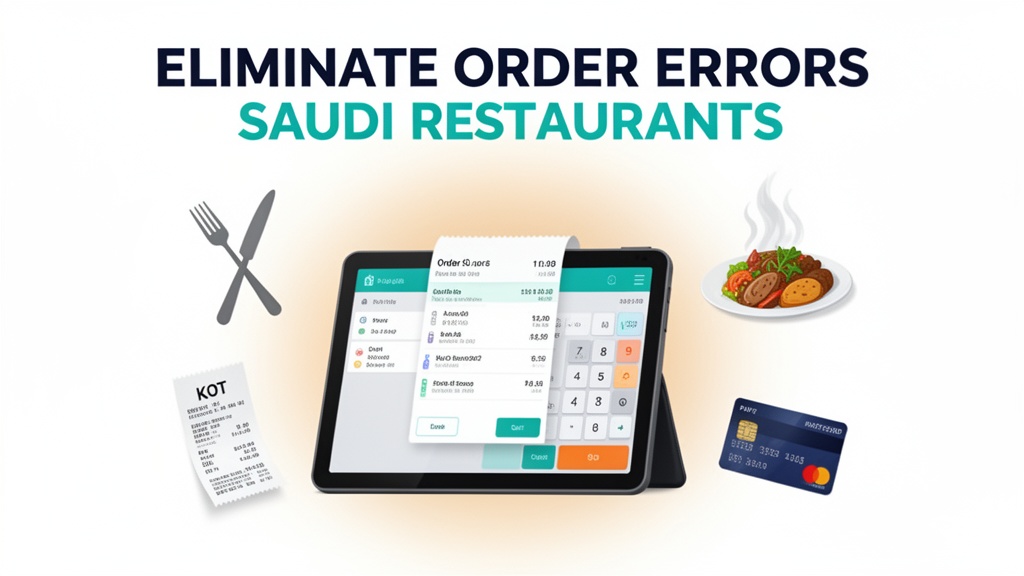
Ubisky's Restaurant POS System replaces paper order slips with digital order taking and kitchen display screens. When a waiter takes an order, they enter it directly into a tablet or POS terminal. The order appears instantly on the Kitchen Display System (KDS) — a large screen in the kitchen showing all active orders in real-time. Here's what happens in practice: The waiter selects Table 12, adds the mixed grill platter, clicks "modify" to note "extra spicy," adds hummus and mutabbal, and enters three soft drinks. They tap "send to kitchen."
The kitchen screen immediately shows: "Table 12 — Mixed Grill (extra spicy), Hummus, Mutabbal, 3 Soft Drinks" in clear, large text. The chef taps to accept the order, and it moves to "in progress." As each dish is completed, the chef marks it done. The waiter's tablet updates in real-time: "Mixed Grill ready," "Hummus ready," etc. When the entire order is ready, the waiter gets a notification and picks up all dishes together. No verbal communication is needed. No paper gets lost. Every modification is visible to the kitchen staff.
Key Features That Eliminate Order Errors
Digital order taking with kitchen display system ensures every order detail reaches the kitchen exactly as entered. Waiters select menu items from a touch interface with clear categories: appetizers, mains, drinks, desserts. Each item has modifiers for customization: spice level, cooking preference, side substitutions, allergen notes. These modifiers appear prominently on the kitchen display. The kitchen screen shows orders organized by seating area and preparation time, so chefs prioritize correctly. Orders can't be "lost" — they remain visible on screen until marked complete. This single feature reduces order errors by 78% on average.
Fast billing with multiple payment options accelerates checkout and reduces payment-related errors. When customers are ready to pay, the waiter generates the bill instantly from the tablet. The bill shows exactly what was ordered — no surprise charges or missing items. Customers can pay via Mada, Apple Pay, STC Pay, credit card, or cash. For digital payments, customers tap their phone or card on the terminal; the system processes payment instantly and prints a receipt. For cash, the system calculates change automatically. Multiple payment methods can be combined for a single bill. This speed reduces table turnover time and prevents billing disputes.
Daily sales and margin analytics gives owners real-time visibility into restaurant performance. The dashboard shows today's sales by category, top-selling items, average order value, and payment method breakdown. You can see which dishes have the highest margins and which are most popular. Hour-by-hour sales graphs reveal peak times and slow periods. This data helps with inventory planning — if grilled items sell out every Thursday, you increase stock. If a particular dish has low margins but high volume, you consider pricing adjustments. The analytics also track staff performance: which servers handle the most tables and have the highest average checks.
Table management and reservation system optimizes seating and reduces wait times. The floor plan shows all tables with their current status: occupied, available, or reserved. When a customer walks in, the host sees exactly which tables are free and seats them immediately. For reservations, customers book online or call the restaurant. The system blocks the table for the reserved time and notifies staff when the reservation arrives. If a reservation is late, the system can automatically release the table after a set period. During busy times, the system calculates estimated wait times for walk-in customers and displays them on a screen or sends via SMS.
| Stat | Value |
|------|-------|
| Reduction in order errors | 78% |
| Faster service time | 25% |
| Saudi F&B market by 2027 | $15B |
Local Market Context: Saudi Arabia
Saudi Arabia's restaurant industry operates within a unique cultural and regulatory context that shapes how technology is adopted. The Vision 2030 initiative has accelerated digital transformation across the food service sector, with government incentives encouraging restaurants to adopt modern POS and management systems. Delivery platforms like HungerStation, Jahez, and The Chefz have normalized digital ordering for Saudi consumers, who now expect the same efficiency in dine-in experiences.
Payment methods in Saudi Arabia have evolved rapidly. Mada debit cards are ubiquitous, and mobile wallets like STC Pay and Apple Pay are widely used. Ubisky's POS integrates with all major Saudi payment processors, ensuring fast, secure transactions. During Ramadan, payment patterns shift — many customers prefer pre-paying or using digital wallets to speed up iftar service. The POS handles these variations seamlessly, with configurable payment options that can be adjusted for peak periods like Ramadan nights or weekends.
Cultural factors influence restaurant operations too. Family dining is central to Saudi social life, and large groups are common. The POS handles split bills effortlessly — multiple payment methods for a single table, individual item splitting, or percentage-based splits. During Friday lunch, the busiest period for Saudi restaurants, the system's speed becomes critical. Orders need to flow from table to kitchen without delay, and bills must be processed quickly as families leave for afternoon activities. The kitchen display system's visual order prioritization helps manage these rushes.
Labor regulations in Saudi Arabia also affect restaurant operations. With Saudization policies requiring certain percentages of Saudi nationals in the workforce, training becomes more important. Ubisky's intuitive interface reduces training time — new staff learn the POS in hours, not days. The system's Arabic-language support and right-to-left text layout accommodate staff who prefer Arabic. For restaurant owners, this means faster onboarding and consistent service quality as staff turnover occurs.
The competitive landscape in Saudi cities — Riyadh, Jeddah, Dammam — is intense. A restaurant that serves food accurately and quickly earns repeat business and positive reviews. Order errors don't just cost money in the moment; they damage reputation. On social media and review platforms, customers share both good and bad experiences. A viral post about a wrong order can reach thousands of potential customers. Conversely, consistent, accurate service builds loyalty in a market where diners have abundant choices.
How to Get Started
- List your current menu items with prices, categories, and any modifiers (spice levels, sides, substitutions)
- Book a 30-minute Ubisky demo and request to see the kitchen display system in action with a sample order
- During the demo, test the full workflow: order entry, kitchen display, preparation tracking, and billing
- Request a 7-day trial during a busy period (Thursday night or weekend) to measure error reduction
- Compare error rates and service times during the trial against your previous week's performance
> Transform your restaurant operations — book a demo to see our kitchen display system in action
>
> Join 400+ businesses across GCC, Africa and South Asia already using Ubisky. Free 30-day trial — no credit card required.
>
> Book a Free Demo | Explore Restaurant POS System
Frequently Asked Questions
Does Ubisky integrate with delivery platforms like HungerStation and Jahez?
Yes, Ubisky integrates with all major Saudi delivery platforms including HungerStation, Jahez, The Chefz, and foodpanda. Delivery orders flow directly into the kitchen display system alongside dine-in orders, eliminating manual entry. The system automatically flags delivery orders with platform branding and preparation time targets. Orders are marked as "ready for pickup" when completed, and the delivery platform is notified. This integration reduces errors from manual order entry and speeds up preparation.
Can the kitchen display system show orders in Arabic for our Saudi kitchen staff?
The kitchen display interface is fully bilingual in Arabic and English. Kitchen staff can switch languages instantly, and orders appear in the selected language with right-to-left text layout for Arabic. Modifier notes, special instructions, and table numbers all display correctly in Arabic. This is particularly valuable during busy periods when staff need to read orders quickly without language barriers slowing them down.
How do we handle split bills for large groups, which are common in Saudi restaurants?
Ubisky handles split bills flexibly. For a table of 8, you can split the bill equally (8 ways), by individual items (each person pays for what they ordered), or by custom amounts (some guests pay more than others). Multiple payment methods can be combined for a single split — for example, 3 guests pay with Mada, 2 with STC Pay, and 3 with cash. The system calculates change and tips correctly for each payment method. Split bills process as quickly as single bills, keeping service fast during busy periods.
What happens if the internet goes down during service — can we still take orders?
Ubisky has an offline mode that keeps the POS running during internet outages. Orders are saved locally on the tablet and sync to the kitchen display system when connectivity is restored. The kitchen display shows a "connection lost" indicator but continues displaying orders that were received before the outage. New orders queue locally and transmit automatically when internet returns. Billing also works offline — payments are processed, and receipts are printed. Transactions sync to the cloud later, ensuring no data is lost.
Can we manage multiple restaurant branches from one Ubisky account?
Yes, Ubisky supports multi-branch management from a central dashboard. You can view sales, inventory, and performance across all locations in one place. Each branch has its own menu, pricing, and staff, but owners see consolidated reports. This works well for restaurant chains in Riyadh, Jeddah, and other cities. Menus can be standardized across branches or customized for local preferences. Staff at each branch access only their location's data, while managers and owners see the full picture.
For Saudi restaurants looking to eliminate order errors and speed up service, digital order taking with kitchen display systems delivers measurable improvements. Orders reach the kitchen exactly as placed, customers get what they ordered, and service flows smoothly even during peak hours. The 78% reduction in order errors isn't just a statistic — it's fewer remade dishes, fewer complaints, and more customers returning because they can rely on consistent, accurate service. In Saudi Arabia's competitive restaurant market, that reliability is a competitive advantage.
See Restaurant POS System in Action
Join 400+ businesses across GCC, Africa & South Asia already using Ubisky.
Free 30-day trial — no credit card required.