It's 8:30 AM on a Monday in Jaipur. Your 4th-grade math teacher, Priya, has been at school since 7:00 AM. She spent the first 45 minutes collecting attendance from 45 students and recording it in her register. Then she spent two more hours grading 30 science worksheets that arrived yesterday. After lunch, she has to prepare lesson plans for the week and send updates to 28 parents about their children's performance. By 4:30 PM, she's exhausted — and she hasn't taught a single class yet. She spends 3-4 hours daily on administrative tasks that don't involve students or learning. In Bangalore's tech-forward schools, teachers who use automated dashboards reduce this time by 40%, giving them more hours for actual teaching. That's the difference between a teacher who stays in education because she has the time to connect with students, and a teacher who burns out after three years.
Indian Teachers Are Doing the Work of Three People
The problem isn't that Indian teachers are lazy or disorganized. The problem is that they're doing work that technology can handle. In Delhi's private schools, a single teacher might manage 45-50 students across multiple subjects. That means recording attendance, grading assignments, publishing grades, sending parent notifications, and tracking student performance — all manually. When a student is absent, the teacher has to call parents or send messages to confirm attendance, which eats into teaching time. When parents ask about their child's progress, the teacher has to dig through physical notebooks to find recent work. This isn't sustainable. Teachers who spend 3-4 hours daily on administrative tasks report higher burnout rates, lower job satisfaction, and reduced time for lesson planning and student engagement. In Mumbai's competitive educational landscape, schools that automate these workflows see 25-30% improvements in parent satisfaction scores — because parents receive real-time updates, not vague emails weeks after the fact.
What Ubisky's School Management System Actually Does
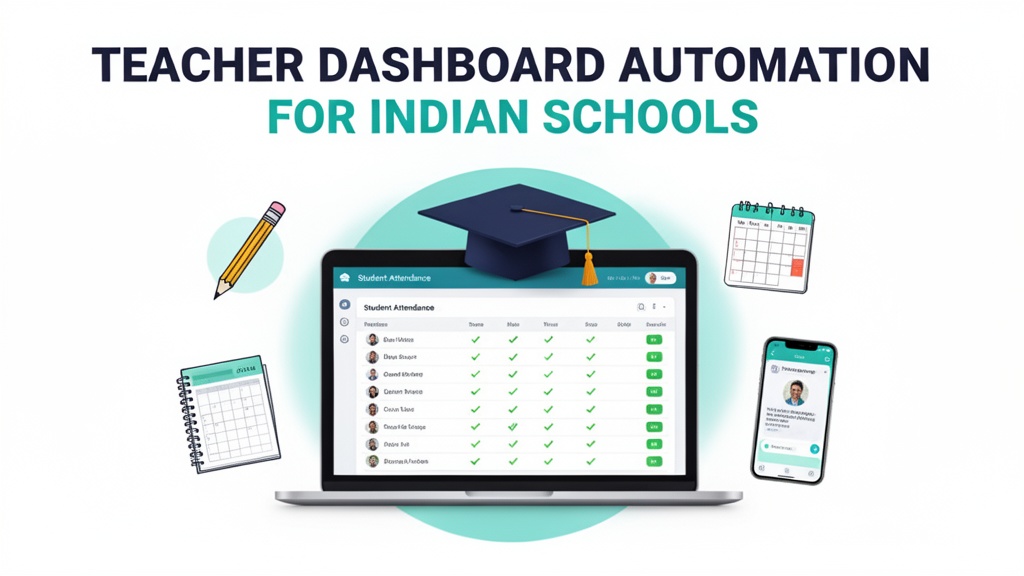
Ubisky's School Management System isn't a "comprehensive ERP platform" — it's a practical tool that automates the repetitive tasks that eat up Indian teachers' days. When Priya arrives at school, she doesn't open a register. She logs into the teacher dashboard on her tablet or laptop. Attendance is pre-populated based on the student's previous day's status. She taps "Present" or "Absent" for each student, and the system automatically records it. That's it. Within 10 minutes, attendance is complete, synced to the parent portal, and parents receive instant notifications on WhatsApp. The system doesn't just record attendance — it aggregates it. You can see which students have unexcused absences, which parents haven't responded to notifications, and which classes have unusually low attendance rates. This data helps you intervene before attendance patterns become chronic.
When Priya finishes grading a set of science worksheets, she enters the marks directly into the dashboard. The system automatically calculates averages, generates report cards, and sends them to parents instantly. No printing, no mailing, no manually typing individual scores into separate WhatsApp messages. Parents in Delhi receive their child's recent performance update while Priya is still in the classroom. The system also sends automated notifications for grades below a certain threshold — for example, if a student scores below 40% in a test, the parent gets a WhatsApp message highlighting the area for improvement. This proactive communication builds trust with parents, who feel informed and engaged without having to chase teachers for updates.
How Each Feature Works in Practice
One-Click Daily Attendance Marking with Auto-Sync to Parent Portal
The attendance workflow is designed for speed and accuracy. Before the school day begins, you import student lists into Ubisky from your existing student database. As students arrive, teachers mark attendance using a simple interface on tablets or laptops. The system defaults to "Present" for students who weren't marked absent the previous day, reducing clicks. For absent students, teachers can quickly add a reason — illness, family emergency, authorized leave. The system automatically flags unexcused absences and generates alerts for homeroom teachers to follow up with parents. Within minutes of marking attendance, the system sends notifications to all parents via WhatsApp. They receive a confirmation message like: "Your child, Rohan Sharma, was marked Present today (June 22, 2026). Attendance has been recorded automatically." If a student was absent, the notification includes the reason and the date of return. In Bangalore's mixed-income areas, where many parents work multiple jobs and may not check school messages during the day, this automation ensures they never miss important attendance information.
Instant Grade Publishing and Report Card Generation
Grading is the most time-consuming part of the administrative workload, but Ubisky streamlines it completely. When Priya finishes marking 30 science worksheets, she selects the students and enters their scores. The system instantly calculates the class average, individual student averages, and generates a report card for each student. These report cards can be exported as PDFs or sent directly to parents via WhatsApp. Parents receive a message with their child's recent grades, average performance, and areas for improvement. The system also allows teachers to attach sample questions or notes to help parents understand how to support their child. In Mumbai's high-pressure academic environment, where parents are accustomed to receiving detailed performance reports, this instant publishing builds trust and transparency. Instead of waiting two weeks for a physical report card that parents might lose, they receive real-time updates they can discuss with their children immediately.
Automated Parent Notifications for Attendance and Performance
The notification system is where Ubisky delivers real value to Indian schools. When attendance is marked, parents automatically receive confirmation messages within minutes. When a student's grade drops below a threshold, the system triggers an alert. When a parent sends a message through the parent portal, the teacher receives it instantly in their dashboard with a notification sound. The system supports different notification types — reminders for upcoming exams, holiday announcements, transportation alerts, and exam schedules. In Hyderabad's traffic-heavy environment, where parents often struggle to reach school on time for parent-teacher meetings, automated notifications bridge the communication gap. Instead of sending parents a single notification once a month, Ubisky sends targeted, personalized messages based on what actually matters — attendance, grades, homework submissions, and upcoming events.
Dashboard Showing Weekly and Monthly Workload Analytics
Ubisky's teacher dashboard gives you visibility into exactly how teachers are spending their time. You can see which teachers are logging the most hours, which subjects have the highest administrative burden, and where bottlenecks exist. The system tracks tasks completed: attendance marked, assignments graded, notifications sent, report cards generated. When a teacher is consistently spending 3+ hours on administrative work, you can identify that issue and provide additional support. The dashboard also shows student engagement metrics — which classes have the highest participation rates, which students are consistently performing well, and which areas need intervention. In Chennai's competitive educational sector, where parent satisfaction directly impacts school enrollment, data-driven insights help you optimize teacher workflows and ensure every teacher has the time to focus on teaching, not paperwork.
| Stat | Value |
|------|-------|
| Administrative work reduction | 35-45% |
| Time saved per teacher | 2-3 hours |
| Parent satisfaction improvement | 25-30% |
Local Market Context: India
India's education system has a unique challenge: teachers are often responsible for managing large classes across multiple subjects. In government schools, class sizes can exceed 60 students. In private schools, even small batches of 35-40 students require significant administrative effort. The annual teacher absenteeism rate in India's primary education sector is approximately 25%, with administrative burnout being a major contributor. When teachers spend their evenings and weekends on grading and attendance, they're less likely to show up for school on time or stay until the end of the day. This creates a cycle of inefficiency that affects students, parents, and school management alike.
The technology landscape in Indian schools is evolving rapidly. Bangalore's private schools were among the first to adopt digital attendance and parent portals, now standard in tier-1 cities. However, in smaller towns and government schools, manual processes remain the norm. The good news is that Indian parents are increasingly tech-savvy. A 2023 survey found that 72% of Indian parents prefer receiving school updates via WhatsApp rather than email or phone calls. This aligns perfectly with Ubisky's automated notification system, which sends messages directly to parents' most-used communication channel. When a parent in Jaipur receives an instant attendance update on WhatsApp, they don't need to log into a portal, download an app, or remember a password. The system works because it fits into their existing behavior.
Payment integration also plays a critical role in Indian schools. Many private schools in India require monthly fee payments through UPI, digital wallets, or net banking. Ubisky integrates with leading payment gateways, allowing you to collect fees online while simultaneously tracking attendance and performance. When a parent pays their child's tuition fees via UPI, the system automatically marks the attendance for that day as well — removing the need for physical attendance registers altogether. In Kerala's education sector, where digital payment adoption is particularly high, this integration reduces administrative friction and ensures that attendance, fees, and grades are all linked in one system.
How to Get Started
Here's exactly how to implement an automated teacher dashboard for your Indian school, step by step:
- Export your current student lists, teacher schedules, and attendance records from your existing system or spreadsheets
- Book a 30-minute Ubisky demo focused on the teacher dashboard module — ask to see the attendance marking workflow with a sample class
- During the demo, test the grade publishing workflow by entering mock scores and verifying that report cards generate instantly
- Request a 14-day pilot with one class of 35 students — compare their attendance accuracy and parent satisfaction scores versus your previous manual processes
- After the pilot, expand the system to all teachers and track the reduction in administrative hours logged in the system
The first two weeks will reveal which teachers adopt the new workflow most quickly and which challenges arise. You'll likely find that teachers who were skeptical at first become advocates once they experience the time savings. In Bangalore's corporate school sector, where teachers have limited time due to their own work commitments, the dashboard becomes an essential tool for balancing teaching with administrative responsibilities.
> Book a free demo — we'll show you how Indian schools use Ubisky to automate teacher dashboards and give more time back to teaching
>
> Book a Free Demo | Explore School Management System
Frequently Asked Questions
Can the system handle different teaching schedules for multi-shift schools?
Yes, Ubisky supports multi-shift scheduling for schools that operate morning and evening sessions. Teachers are assigned to specific shifts, and the dashboard shows attendance and grades only for their designated classes. The system automatically filters data based on the teacher's current shift, preventing confusion and ensuring accurate record-keeping. In cities like Mumbai and Delhi where multi-shift schools are common, this feature is essential for organized operations.
Does the system support bilingual education (English and regional languages)?
Ubisky supports multi-language interfaces for teachers, students, and parents. You can configure the dashboard to display in English, Hindi, Tamil, Telugu, or other regional languages. Notifications can be sent in the language parents prefer, which is particularly valuable in states like Punjab, Kerala, and Karnataka where regional language preference is strong. Teachers can switch between languages based on their comfort, while parents receive updates in their chosen language.
How do we handle exam schedules and grade publishing?
The system includes an automated exam management module. You can create exam schedules, configure grade weights, and define grading scales. When teachers mark exam results, the system automatically calculates final scores, generates report cards, and sends notifications to parents. The dashboard shows upcoming exams, completed exams, and grade trends over time. In Hyderabad's competitive academic environment, this feature helps parents track their child's progress throughout the academic year rather than only at report card time.
Can we integrate with existing parent communication apps like Parent App?
Ubisky supports API integrations with popular parent communication platforms. You can connect Ubisky to existing apps or use Ubisky's native parent portal as a standalone solution. If you already have a parent app, you can use Ubisky's data export features to sync attendance and grades. However, many schools in India find that a unified system reduces technical complexity and ensures all communication happens in one place.
What happens if our internet connection is unstable?
The system is designed to work with intermittent internet. Teachers can mark attendance and enter grades offline, and the data syncs automatically once a stable connection is restored. This is particularly important for schools in rural areas or regions with inconsistent internet infrastructure. In Bihar, Uttar Pradesh, and other states with variable connectivity, this offline capability ensures that administrative workflows continue uninterrupted.
The 40% reduction in administrative burden isn't just a number — it's the difference between teachers who burn out after three years and teachers who stay in the profession for a decade. In India's education sector, retaining experienced teachers is a major challenge. When schools automate repetitive administrative tasks, teachers have more time for lesson planning, student engagement, and professional development. Parents receive timely updates, stay engaged, and feel more confident in the school's operations. Students benefit from more focused teaching, better attendance tracking, and clearer communication about their progress. This is how Indian schools create a sustainable education ecosystem where everyone — teachers, parents, and students — thrives.
Book a Free Demo | Explore School Management System
See School Management System in Action
Join 400+ businesses across GCC, Africa & South Asia already using Ubisky.
Free 30-day trial — no credit card required.