Dr. Al-Mansouri is seeing his eighth patient of the morning in Dubai Healthcare City. The patient, a 45-year-old banker from Abu Dhabi, was here last month with chest pain. The doctor flips through a thick paper file, searching for the ECG report from that visit. It's not there. He asks the nurse to check records storage. Five minutes pass. The patient waits. The doctor recalls prescribing a blood thinner but can't remember the dosage without the previous notes. The nurse returns — the file is in the archives, will take 20 minutes to retrieve. The doctor proceeds without it, relying on memory and what the patient can remember. This happens daily in hospitals across the UAE. Every minute spent searching for records is a minute not spent on patient care. Every memory lapse is a potential treatment error.
Why Paper Records Are Putting Patients at Risk
Disorganized patient records are a silent crisis in UAE healthcare. Manual record retrieval takes an average of 8-12 minutes per patient versus 30 seconds with digital systems. In a busy clinic seeing 40 patients daily, that's 5-8 hours wasted just finding files — time doctors should spend diagnosing and treating. More critically, paper records create treatment risks. Studies show digitized patient records can reduce medical errors by up to 40% in medium-sized hospitals. When a doctor can't see a patient's full history — previous diagnoses, medications prescribed, allergies noted, lab results from other facilities — they make decisions with incomplete information. In the UAE, where patients often visit multiple hospitals and clinics, fragmented records mean critical information doesn't travel with the patient. A patient's allergy might be recorded at one facility but unknown at another. A medication prescribed last month in Abu Dhabi might conflict with something prescribed today in Dubai. The consequences range from ineffective treatment to serious adverse reactions. Paper isn't just inefficient — it's dangerous.
What Ubisky Hospital Management Actually Does
Ubisky Hospital Management System digitizes your entire patient record operation. When a patient arrives, your front desk searches by name, Emirates ID, or phone number — their complete record appears in seconds. Every visit, diagnosis, prescription, lab result, and scan is stored digitally and accessible from any computer in your facility. Doctors pull up patient histories during consultations, seeing everything at a glance. The system integrates with lab equipment — results upload automatically to the patient file and notify both doctor and patient via WhatsApp. Scheduling is centralized — patients book online, see doctor availability in real-time, and receive automated appointment reminders. Billing happens automatically after consultations, with insurance claims generated and submitted electronically. Your pharmacy inventory links directly to prescriptions, tracking stock and alerting to low quantities. What used to require physical file folders, phone calls, and manual data entry now flows through one integrated digital platform.
Key Features That Transform Patient Care
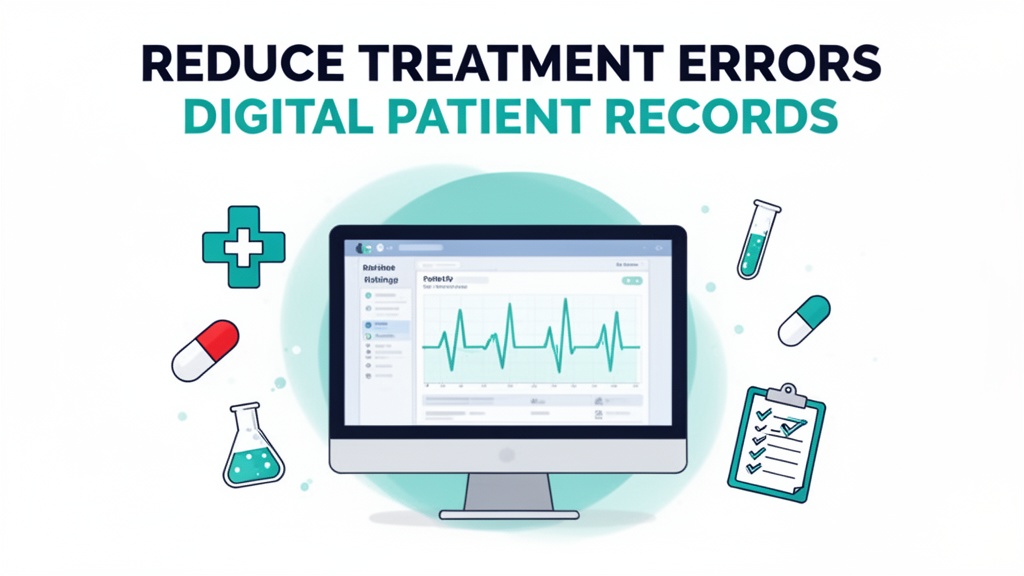
Digital patient records with fast search and retrieval eliminate file hunting from your workflow. When Dr. Al-Mansouri searches for a patient, he sees their complete medical history: past diagnoses, medications prescribed, allergies noted, lab results, imaging reports, and visit notes. He can filter by date, condition, or treatment type. He can share records securely with specialists if the patient needs referral. The search takes seconds, not minutes. UAE healthcare facilities implementing digital records report 25% faster diagnosis times because doctors have all the information they need immediately. No more calling other facilities for faxed records. No more relying on patient memory. The complete picture is always available.
Online appointment booking with automated reminders reduces no-shows and optimizes your schedule. Patients book through a simple web portal or WhatsApp interface, selecting their preferred doctor and time slot based on real-time availability. The system sends WhatsApp reminders 24 hours and 2 hours before appointments, reducing missed visits significantly. If a patient needs to reschedule, they can do it online without calling your reception staff. Your front desk shifts from answering phone calls to handling actual patient needs. Doctors see their daily schedules at a glance, with patient histories pre-loaded before each consultation.
Lab result integration and patient notifications close the loop between testing and treatment. When a lab test is completed, results upload automatically to the patient's digital record. The doctor is notified instantly and can view results alongside the patient's history. The patient receives a WhatsApp message when results are ready, with secure access to view them online. For critical results, the system escalates notifications to ensure urgent cases get immediate attention. No more patients waiting days for phone calls about test results. No more lost lab reports. Results follow the patient digitally, accessible to any authorized doctor in your facility.
Doctor scheduling and availability tracking ensures your resources match patient demand. The system tracks doctor schedules, vacation time, and clinic hours. You can see at a glance which doctors have available slots, which are overbooked, and where you need to adjust capacity. When a doctor is running late, the system notifies waiting patients automatically, reducing frustration. You can analyze appointment patterns to optimize staffing — perhaps Monday mornings always need extra coverage in pediatrics, or Thursday afternoons have consistent gaps in cardiology. Data-driven scheduling replaces guesswork.
| Stat | Value |
|------|-------|
| Reduction in medical errors | 40% |
| Faster diagnosis times | 25% |
| Record retrieval time | 30 sec |
Local Market Context: UAE
The UAE's healthcare landscape makes digital records particularly urgent. The country has a highly mobile population — expatriates move between emirates, and patients frequently switch between hospitals and clinics in Dubai, Abu Dhabi, and Sharjah. Paper records don't travel with them, creating dangerous gaps in medical history. The Dubai Health Authority (DHA) and Abu Dhabi Department of Health (DoH) have both launched initiatives to digitize healthcare, but individual facilities still need systems that integrate with their operations. Ubisky complies with UAE healthcare data regulations, ensuring patient privacy and security standards are met.
Insurance is another critical factor. Most UAE residents have health insurance through employers, and claims processing requires documentation. Digital records generate clean, standardized reports that insurers accept electronically, reducing claim rejections and speeding up reimbursement. The system handles different insurance providers' requirements automatically, so your billing staff doesn't manually format claims for each company.
Cultural factors also shape healthcare delivery in the UAE. Many patients prefer Arabic language communication, especially older Emiratis. Ubisky's interface and notifications support Arabic fully, from patient-facing booking portals to doctor notes. Family involvement in healthcare decisions is common — the system allows authorized family members to access patient records with proper consent, respecting cultural norms while maintaining privacy. Friday clinic hours are often reduced during prayer times, and the scheduling system accommodates these operational variations automatically.
How to Get Started
- Audit your current record-keeping process and identify the most critical bottlenecks — usually record retrieval and lab result delays
- Book a 30-minute Ubisky demo focused on the digital record workflow and search capabilities
- Select 20-30 patient records for pilot digitization to test search speed and doctor adoption
- Train your front desk on online booking and patient registration — most staff are comfortable within one session
- Roll out to all departments over 2-3 weeks, starting with the clinic that has the highest record retrieval volume
> See how UAE hospitals use Ubisky to digitize patient records and reduce errors — schedule a demo.
>
> Join 400+ businesses across GCC, Africa and South Asia already using Ubisky. Free 30-day trial — no credit card required.
>
> Book a Free Demo | Explore Hospital Management System
Frequently Asked Questions
Does the hospital system integrate with DHA and DoH electronic health record initiatives?
Ubisky is designed to align with UAE healthcare digitization standards. While direct integration with government EHR systems depends on your facility's specific agreements and API access, the system exports data in formats compatible with DHA and DoH reporting requirements. Our team works with your IT department to ensure compliance with local healthcare regulations.
How do we handle patient data privacy under UAE law?
Patient data is stored in secure, encrypted servers with access controls based on user roles. Only authorized staff can access patient records, and all access is logged for audit trails. The system complies with UAE data protection regulations, including requirements for data residency and patient consent for record sharing. Patients control who can access their information.
Can patients access their own records online?
Yes, patients can access their records through a secure patient portal. They can view lab results, appointment history, and prescriptions. The system sends WhatsApp notifications when results are ready or appointments are scheduled. Access requires authentication, and patients can grant temporary access to family members or specialists if needed for care coordination.
How does the system handle Arabic medical terminology and bilingual records?
Ubisky supports full Arabic language functionality, including right-to-left text rendering. Medical terms can be stored in both Arabic and English, and the interface language can be set per user. Patients receive notifications in their preferred language, and doctors can write notes in either language. Search works across both languages, so a doctor searching in Arabic will find records written in English and vice versa.
What happens to existing paper patient records during migration?
Existing paper records are scanned and digitized during onboarding. Our migration team helps you organize the scanning process, prioritizing active patients and recent records. The scanned documents are attached to digital patient profiles and indexed for search. Physical files can then be archived securely. The migration typically takes 2-4 weeks depending on your record volume, and we work around your schedule to minimize disruption.
Digital patient records transform healthcare delivery in the UAE. Doctors make decisions with complete information, not fragments. Patients receive faster, more accurate care because their history travels with them. Administrative staff spend less time hunting for files and more time supporting patients. Lab results reach doctors and patients instantly, not after days of phone calls. The 40% reduction in medical errors isn't just a statistic — it's 40% fewer preventable mistakes that could harm patients. UAE hospitals and clinics that adopt digital systems report not just improved outcomes but increased patient trust and satisfaction. Explore the Hospital Management System to see how it works for UAE healthcare facilities.
See Hospital Management System in Action
Join 400+ businesses across GCC, Africa & South Asia already using Ubisky.
Free 30-day trial — no credit card required.