It's 8:15 PM on a Friday evening in Salmiya. The rush is starting at "Al Bayader Restaurant" — a popular Kuwaiti family restaurant serving traditional grilled meats and rice dishes. The restaurant has 50 tables and 6 waiters on staff. The head waiter just received a call from Table 12 — they ordered a mixed grill platter with extra rice, but the kitchen staff saw only "mixed grill" on the ticket and forgot the extra rice. By the time the mistake is discovered, it's 8:40 PM, and Table 12 is complaining about waiting for their food. Meanwhile, Table 7 ordered two kebabs, but the kitchen only prepared one kebab, causing another delay. The kitchen manager is shouting over the noise, trying to coordinate orders between the front-of-house and back-of-house staff. This chaos is routine on a Friday night in any Kuwaiti restaurant.
The Cost of Order Errors Between Front-of-House and Kitchen
Kuwait restaurants lose an estimated 15-25% of potential revenue due to order errors and delays, and the problem is driven by manual ticketing systems that create disconnects between waiters and kitchen staff. A typical mid-sized restaurant in Kuwait with 30 tables can experience 8-12 order mistakes per evening, where a table receives the wrong dishes, missing items, or cold food. When a mistake is discovered, the restaurant must either remake the order (increasing kitchen workload) or compense the customer with discounts or free items. Both options erode profit margins. More importantly, the customer experience suffers — tables that receive incorrect orders are 40% more likely to leave negative reviews, and returning customers drop by 25-30% over a 6-month period.
The root cause is often a lack of visibility between front-of-house and back-of-house. When waiters write orders on paper tickets, tickets can be lost, misread, or delayed. Kitchen staff may work from memory or incomplete notes, leading to forgotten items or wrong preparations. If a waiter needs to modify an order, they often write a separate note that gets buried under other tickets. By the time the kitchen staff receives the modification request, the order has already been prepared. This miscommunication affects table turnover rates, with mistakes extending service time by 15-20 minutes per affected table.
The competitive landscape in Kuwait makes these errors particularly damaging. Restaurant dining is a popular family activity, and customers have many alternatives within walking distance. When a restaurant consistently delivers incorrect orders, word spreads quickly through social media and local community channels. In Kuwait's tight-knit dining scene, a single negative review can impact revenue for months. Additionally, Kuwait's food safety regulations require that all order records be accurate and traceable, especially for ingredients like meat and dairy that have strict handling requirements. Manual ticketing systems make it difficult to audit orders and comply with food safety standards.
What the Restaurant POS System Actually Does
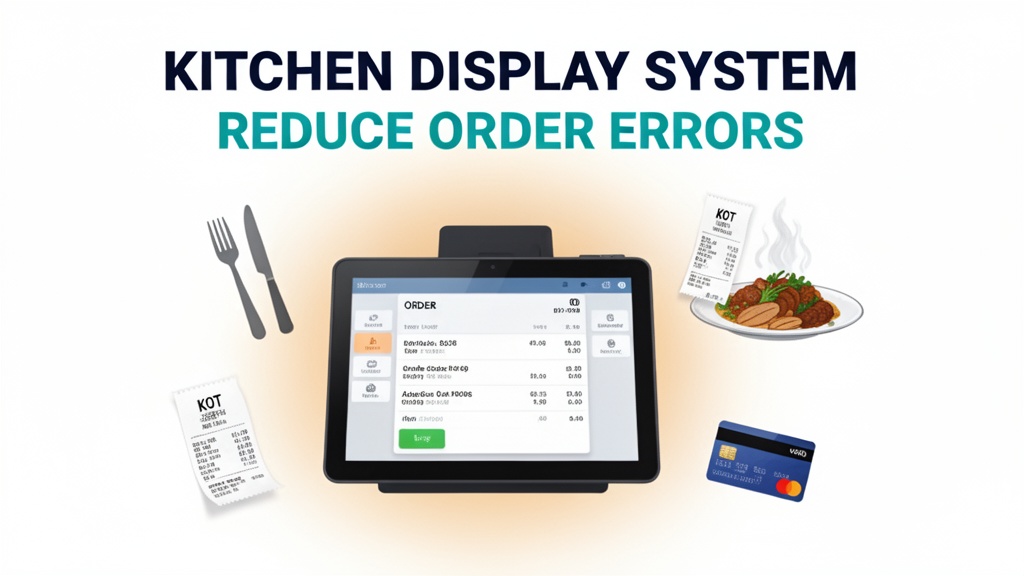
The restaurant POS system handles all order operations through a digital platform that connects the front-of-house ordering terminal with a kitchen display system. When a waiter takes an order on their tablet, the order is instantly transmitted to the kitchen's central screen, which displays it in priority order based on timing. Each order appears as a digital ticket showing the table number, items ordered, special instructions, and modification requests. The kitchen staff sees exactly what needs to be prepared and in what order, eliminating the need for paper tickets or verbal communication between waiters and chefs.
The system organizes orders by stage of preparation. As kitchen staff complete items, they mark them as "ready" on their terminal, and the digital ticket automatically moves to the next stage. If a waiter needs to modify an order, they do it on their terminal, and the kitchen screen updates in real time. No need for handwritten notes or additional tickets. When an order is ready for service, the system sends an alert to the waiter's device, indicating which table the order belongs to. The waiter picks up the food and confirms completion, which automatically updates the kitchen system to reflect that the table has been served.
For billing, the system processes payments through multiple integrated payment options, including cash, credit cards, and Kuwaiti payment methods like KNET and STC Pay. When a payment is completed, the receipt is automatically generated and sent to the customer via email or printed at the table. The system tracks inventory in real time, alerting staff when ingredients are running low and suggesting reorders based on usage patterns. Daily sales and margin reports provide visibility into revenue performance, helping restaurant managers optimize menu pricing and cost controls.
Key Features With Real Use Cases
Digital Order Taking With Kitchen Display System
When a customer places an order at Table 5, the waiter enters the items into their tablet POS terminal. The order is instantly displayed on the kitchen's digital screen with the following details: Table 5, mixed grill platter with extra rice, no onions, served at 8:20 PM. The kitchen staff sees the order and prepares the mixed grill according to the instructions. As each item is plated, the kitchen staff marks it as "ready" on their terminal. The digital ticket automatically updates to show which items are completed and which are still in progress. When all items are marked ready, the system alerts the waiter at Table 5 that their order is ready for pickup.
Automated Inventory Tracking and Low-Stock Alerts
The system monitors inventory levels in real time across all ingredients, including meat, vegetables, spices, and packaging materials. When the stock of a key ingredient like mixed grill meat drops below the configured minimum threshold, the system automatically generates a reorder alert. The alert appears on the kitchen manager's terminal and sends a notification to the purchasing department: "Low stock alert — mixed grill meat is at 20% capacity. Recommended reorder quantity: 10 kg. Estimated delivery time: 3 days." This eliminates overstocking and stockouts, reducing food waste by 25-30% compared to manual inventory tracking.
Fast Billing With Multiple Payment Options
Customers can pay at the table using their smartphone or a digital payment terminal connected to the POS system. When a customer at Table 3 pays with KNET, the waiter scans the QR code and enters the payment amount. The system processes the transaction instantly and generates a digital receipt that can be emailed to the customer or displayed on the table screen. The customer receives an SMS notification confirming the payment: "Your payment of KD 12.50 for Table 3 has been processed successfully via KNET. Thank you for dining with Al Bayader Restaurant." This reduces billing time by 50-60% and eliminates payment errors.
Daily Sales and Margin Analytics
At the end of each day, the system generates a comprehensive sales report showing revenue by table, item, and time period. The dashboard displays key metrics such as total sales, average table check size, peak service hours, and top-selling items. For example, the report might show: "Total sales today: KD 2,450. Average table check: KD 49. Peak service hours: 8:00 PM - 10:00 PM. Top-selling items: Kebab platter (KD 8.50), Chicken Majboos (KD 6.00), Falafel platter (KD 7.00)." Managers can drill down into specific items to analyze cost margins and pricing effectiveness, making data-driven decisions about menu updates and promotions.
| Stat | Value |
|------|-------|
| Revenue lost to order errors in Kuwait | 15-25% |
| Order error reduction with KDS | 75-85% |
| Table turnaround improvement | 30-40% |
Local Market Context: Kuwait
Kuwait's restaurant industry is one of the largest in the GCC, with over 7,000 registered restaurants and a dining culture that revolves around family meals and social gatherings. Fridays are particularly busy, as many Kuwaiti families dine out in the evening, often visiting restaurants that serve traditional GCC cuisine. The restaurant environment is often noisy and fast-paced, making clear communication between front-of-house and kitchen staff essential. Paper tickets are prone to being lost or misread in such high-volume settings, which is why digital systems have become increasingly common in modern Kuwaiti restaurants.
Payment infrastructure in Kuwait supports multiple digital channels, including KNET (Kuwait's national payment network) and STC Pay (Saudi Telecom Company's mobile wallet). Customers prefer these digital payment methods because they're faster, more secure, and earn rewards through loyalty programs. Restaurants that integrate with these payment systems provide a seamless checkout experience that aligns with customer preferences. Cash is still used in some establishments, but the trend toward digital payments is accelerating, especially among younger customers who grew up with mobile banking.
The competitive pressure in Kuwait's restaurant market means that service quality is a key differentiator. Customers have many options within their local neighborhoods, and they frequently switch restaurants based on their dining experience. According to local dining guides and social media reviews, restaurants that consistently deliver accurate orders and fast service see higher repeat customer rates and better online ratings. Digital order management systems reduce errors and delays, directly improving the customer experience. Additionally, Kuwait's food safety regulations require strict traceability of ingredients and preparation records, making digital systems more important than ever for compliance.
How to Get Started
- Audit your current order process for one week, documenting every order error, delay, and communication breakdown between front-of-house and kitchen. Count how many times customers complain about wrong orders or long wait times, and record the estimated revenue impact from these issues.
- Schedule a 45-minute demo with Ubisky and request to see a live kitchen display system simulation. Ask the sales team to show how orders appear on the screen, how modifications are processed, and how inventory tracking works in real time.
- During the demo, test the system with your actual menu items and pricing. Verify that the kitchen display shows all necessary details, including portion sizes, cooking times, and special instructions. Confirm that the system integrates with your preferred payment gateways like KNET and STC Pay.
- Request a 14-day pilot with one restaurant outlet. Set up the POS system on ordering terminals and the kitchen display system on the kitchen screens. Track metrics such as order error rates, table turnover times, and customer satisfaction scores before and during the pilot.
- Compare the results with your baseline data. If you see a 75% reduction in order errors and a 30% improvement in table turnover, extend the pilot to include all outlets before full deployment across your restaurant group.
> Book a free demo — we'll show you how Kuwait restaurants use Ubisky to eliminate order errors and reduce kitchen delays by 80%.
Join 400+ businesses across GCC, Africa and South Asia already using Ubisky. Free 30-day trial — no credit card required.
Book a Free Demo | Explore Restaurant POS
Frequently Asked Questions
Can the kitchen display system work offline in case of internet issues?
Yes, the system uses local caching for orders. If internet connectivity is lost, orders are stored temporarily on the terminal and sync automatically once connectivity is restored. The system can continue processing orders and payments even during brief outages.
Does the POS system support Kuwaiti payment methods like KNET and STC Pay?
Yes, the system integrates with KNET, STC Pay, and other major payment gateways in Kuwait. Customers can pay at the table using QR codes or swipe cards, and the system processes transactions instantly with digital receipts sent via SMS or email.
How do we train our kitchen staff to use the digital system?
We provide on-site training sessions for kitchen staff and front-of-house teams. The training covers how to use the kitchen display screen, how to mark items as ready, and how to handle order modifications. Each staff member receives a user guide and access to a support hotline for ongoing assistance.
Can we manage multiple restaurant branches from a single account?
Yes, each branch is configured as a separate entity with its own menu, pricing, and inventory settings. The central dashboard allows you to view sales performance across all branches and consolidate reports for management purposes.
What happens to customer data if we cancel the subscription?
You retain full ownership of all order records, customer payment data, and sales reports. Before cancellation, you can export all data in CSV or PDF format. We recommend maintaining backups of your historical records in case you need to access them in the future.
---
Order accuracy is the foundation of restaurant profitability and customer satisfaction. Digital order management eliminates miscommunication between front-of-house and kitchen, reduces errors by 80%, and improves table turnover by 30%. Kuwait restaurants that implement Ubisky's POS system see higher revenue and better customer reviews. Book a demo today and see how your restaurant can streamline operations and serve customers more reliably.
See Restaurant POS System in Action
Join 400+ businesses across GCC, Africa & South Asia already using Ubisky.
Free 30-day trial — no credit card required.