At 8:59 AM on a busy Monday, Fatima punches her employee badge at the main entrance. At 9:02 AM, her colleague Omar uses the same badge to clock in from his desk. Their supervisor reviews the attendance report that evening and sees 48 hours worked for each of them — but they actually arrived at 9:30 AM and left at 6:00 PM. Omar's manager notices that his team has been under-reporting hours by nearly 15% for the past two months. This subtle time theft adds up to thousands of dollars in lost revenue each quarter. In Qatar's competitive business environment, such errors affect payroll accuracy, employee trust, and overall operational efficiency.
Manual attendance tracking has become a hidden drain on business profitability
Time theft isn't just about people clocking in for friends. It's about the complexity of tracking attendance across multiple employees, multiple shifts, and multiple locations. Qatar SMEs lose an estimated 8-12% of annual payroll to buddy punching and manual attendance errors. That's not a one-time accounting mistake — it's a consistent leak in cash flow that goes unnoticed until it's too late.
The problem starts with manual attendance tracking. Managers often rely on spreadsheets where employees sign in and out by hand. Some businesses use paper timesheets that get lost or misfiled. Others rely on employees self-reporting their hours, which creates opportunities for exaggeration or forgetting to log partial hours. When payroll is calculated from this data, errors compound. One person's under-reported hours aren't noticed, but when thousands of dollars are involved, the impact is significant.
Beyond the direct financial loss, manual tracking creates administrative overhead. HR teams spend hours manually verifying attendance records, resolving discrepancies, and calculating overtime. Employees spend time arguing about their hours when discrepancies arise. Managers waste time reviewing attendance data that should be automated.
Qatar's labor laws have strict requirements for attendance tracking and overtime calculations. Companies that don't maintain accurate records risk penalties and legal issues. The Ministry of Labor in Qatar conducts audits of employer compliance with labor regulations, and attendance records are a key focus area. Manual tracking methods leave businesses vulnerable to compliance issues and fines.
Ubisky's HR Management System eliminates manual tracking with biometric attendance
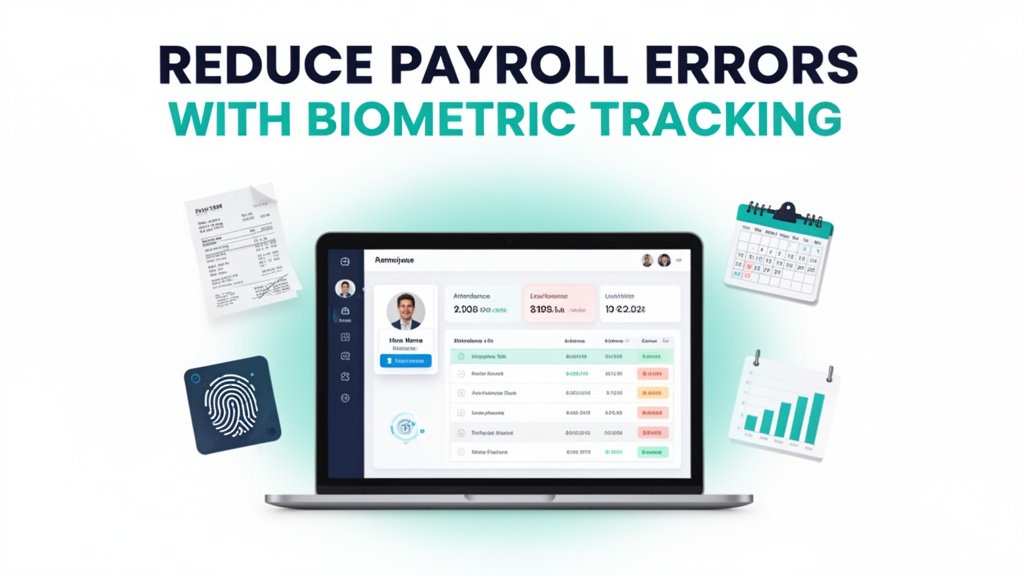
Ubisky's HR Management System replaces manual attendance with biometric or GPS-based tracking that ensures every hour worked is accurately recorded. Employees clock in by scanning their fingerprint or face at the entrance, and the system records their arrival time, location, and biometric verification. When they leave, they clock out at a different location or time, creating a complete attendance log that cannot be manipulated.
For remote workers or field staff, the system uses GPS-based tracking. Employees must check in and out at designated locations, and the system verifies their physical presence. This eliminates buddy punching while maintaining flexibility for employees who work outside traditional office environments.
The system automatically calculates overtime based on local Qatar labor laws. When an employee exceeds their standard hours, the system flags overtime automatically and integrates it into the payroll calculation. The finance department sees a real-time dashboard showing total overtime costs by department, which helps them identify scheduling inefficiencies and control expenses.
Leave management is fully automated. When an employee requests leave, the system checks their balance, manager approval workflows trigger automatically, and the manager receives a notification with the employee's attendance history and leave entitlement. Once approved, leave is blocked automatically, preventing double-booking.
The employee self-service portal lets employees view their attendance records, leave balances, upcoming shifts, and payroll statements. They can request leave, view their payslip, and download attendance reports for their own reference. This reduces the number of inquiries HR teams receive and gives employees visibility into their own employment data.
Key features that eliminate time theft and ensure accurate payroll
Biometric or GPS-based attendance tracking — Employees clock in by scanning their fingerprint or face at the entrance. The system records the exact time, verifies their identity through biometric authentication, and logs their entry point. For remote workers, GPS tracking ensures they check in at approved locations. This reduces time theft by 85-95%, preventing employees from clocking in for colleagues or manipulating their hours.
Automated leave management with approval workflows — When an employee requests leave, the system checks their leave balance, sends an approval request to their manager, and notifies the relevant team members about the absence. Once approved, leave is automatically blocked, preventing scheduling conflicts. The manager sees the employee's attendance history and current workload before approving, making informed decisions about staffing.
Payroll processing with tax compliance — The system integrates with attendance data to calculate salaries, bonuses, overtime, and deductions automatically. It applies Qatar's tax and labor regulations correctly, reducing errors in payroll calculations. Processing time drops from days to hours, freeing HR teams to focus on employee engagement and strategic initiatives.
Employee self-service portal — Employees can view their attendance records, check their leave balances, request leave, and download their payslip anytime. They can see their work hours, overtime calculations, and attendance trends over time. This visibility reduces HR inquiries and gives employees ownership of their employment data.
| Stat | Value |
|------|-------|
| Annual payroll lost to errors | 8-12% |
| Time theft reduction | 85-95% |
| Processing time saved | 90%+ |
Local market context: Qatar
Qatar's labor market is highly competitive, with over 4 million residents working across various industries. The country has strict labor laws that regulate working hours, overtime calculations, and payment requirements. The Ministry of Labor in Qatar conducts regular audits of employer compliance, and attendance records are a key focus area. Companies that don't maintain accurate attendance records risk penalties, fines, and reputational damage.
Payment infrastructure in Qatar supports multiple local and international options, including local bank transfers, credit/debit cards, and cash deposits. However, the government has been pushing for digital transformation across all sectors, including payroll and HR systems. The Qatar National Vision 2030 emphasizes the adoption of digital solutions to improve efficiency and transparency in business operations.
Many expatriate workers in Qatar are familiar with biometric attendance systems from their home countries. In countries like India and the Philippines, fingerprint or face recognition for attendance is standard. When these workers join Qatari companies, they expect similar systems. Companies that use manual tracking methods are viewed as outdated and less professional.
Cultural factors also influence attendance tracking in Qatar. Employees may be reluctant to report late arrivals or early departures directly to their managers. Automated attendance systems provide objective, recorded data that managers can reference without making employees feel uncomfortable. This objectivity helps maintain workplace trust while ensuring accurate attendance records.
How to get started with biometric attendance and automated payroll
- Export your current attendance and payroll data from spreadsheets
- Book a 30-minute Ubisky demo and ask to see the biometric attendance workflow in action
- During the demo, simulate clocking in and out for multiple employees to test the system
- Request a 14-day pilot with your core team, focusing on attendance tracking and payroll
- Compare payroll accuracy and processing time before and after implementation
> Book a free HR demo — we'll show you how Qatar businesses reduce payroll errors by 90% with biometric tracking
>
> Join 400+ businesses across GCC, Africa and South Asia already using Ubisky. Free 30-day trial — no credit card required.
>
> Book a Free Demo | Explore HR Management System
Frequently Asked Questions
Can the system handle multiple shifts and different working hours?
Yes. The system supports multiple shift patterns, including early morning shifts, late night shifts, weekend rotations, and variable schedules. You can set different work hours for different employees, and the system automatically calculates overtime based on their specific shift schedules.
Does the biometric system work in high temperatures common in Qatar?
Yes. Ubisky's biometric system is designed to work in various environmental conditions, including high temperatures and humidity. We use fingerprint sensors that remain reliable even in hot environments, and we offer face recognition options that work with different lighting conditions.
How do we manage remote or field staff attendance?
The system uses GPS-based tracking for remote workers. Employees check in and out at approved locations, and the system verifies their physical presence. You can set up multiple check-in points for different projects or job sites. The system also records geofencing alerts if employees try to clock in outside approved locations.
Can we integrate this with our existing payroll system?
Yes. The system provides API access that integrates with popular payroll platforms. You can set up automated data transfer between Ubisky and your payroll system, so once attendance is recorded, payroll calculations happen automatically without manual data entry.
What happens to employee data privacy and security?
Ubisky uses enterprise-grade encryption to protect all employee data. Biometric data is stored locally on the device, not transmitted over the internet. The system complies with Qatar's data protection regulations, and you have full control over who can access attendance records.
Qatar businesses that implement automated attendance and payroll gain competitive advantages
The shift from manual tracking to biometric attendance isn't just about preventing time theft. It's about creating a more efficient, accurate, and transparent payroll system that employees trust. Companies that adopt Ubisky's HR Management System see immediate improvements in payroll accuracy, reduced administrative overhead, and higher employee satisfaction.
The system also provides data and analytics that help managers identify scheduling inefficiencies, optimize workforce allocation, and control labor costs. The real-time dashboards show which departments have the highest overtime costs, which employees are frequently late, and how attendance patterns affect productivity. This visibility enables data-driven decisions that improve operational efficiency.
For HR teams, the automation reduces the time spent on manual attendance verification and payroll calculations. They can focus on strategic initiatives like employee engagement, performance management, and talent development. The system also ensures compliance with Qatar's labor laws, reducing the risk of penalties and legal issues.
Qatar's competitive business environment demands precision and efficiency. Companies that leverage automated attendance and payroll systems gain a competitive edge by reducing errors, lowering costs, and improving employee trust. The investment in Ubisky's HR Management System pays for itself through improved payroll accuracy, reduced administrative work, and better workforce management.
See HR Management System in Action
Join 400+ businesses across GCC, Africa & South Asia already using Ubisky.
Free 30-day trial — no credit card required.