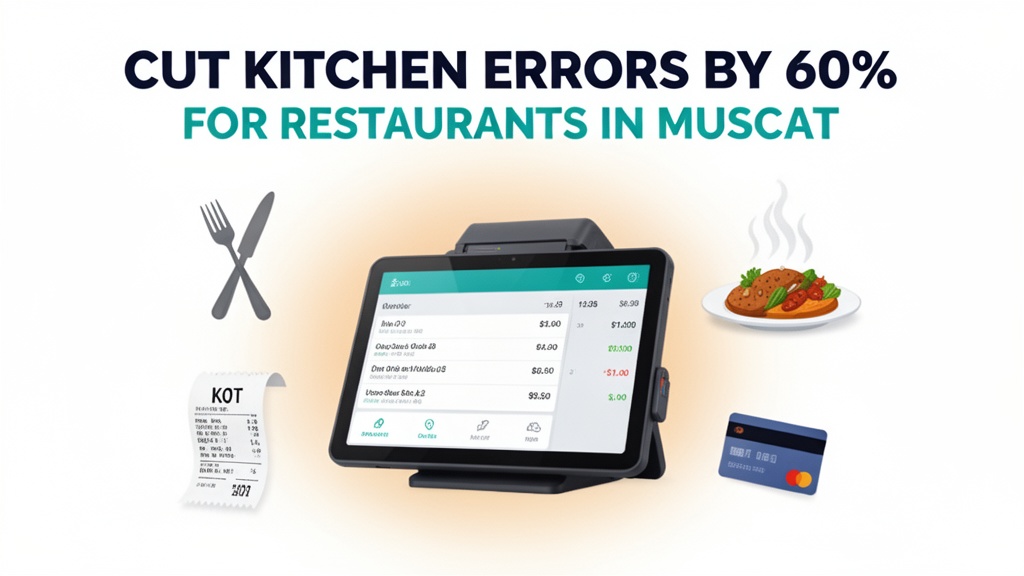
It's Friday evening at one of Muscat's popular restaurants. The floor manager receives 18 tables filled with customers waiting for orders. The kitchen staff are juggling printed tickets that are piling up on the pass. "Table 4 ordered 3 Malabar parotta with chicken curry," the waiter says. "Table 12 wants 2 biryani with extra raita." "Table 8 ordered prawn biryani." But wait — the waiter whispers, "I think Table 8 wanted prawn biryani, but I wrote biryani by mistake." The kitchen chef opens the printed ticket and frowns. "I see biryani here, but the customer asked for a fish biryani. Did you write fish?" The waiter checks his notebook. "I might have written biryani by mistake." Meanwhile, Table 14 has been waiting 25 minutes for their starters. "When is the chicken wings coming?" a customer asks. "Let me check," the waiter says. He looks at the kitchen staff. They're arguing over a ticket that got swapped with another table's order. This is a typical Friday night in Muscat restaurants — busy, chaotic, and prone to mistakes.
The Problem with Order Errors Between Front-of-House and Kitchen
Order errors between front-of-house and kitchen staff are one of the biggest sources of customer dissatisfaction in GCC restaurants. When waiters make mistakes writing down orders, or when tickets get mixed up, the kitchen staff get the wrong information. According to data from restaurants across the region, order errors between front and back-of-house cause 15-20% of dissatisfied customer reports. That's almost one in five complaints restaurants receive, and the vast majority of those complaints stem from the same underlying problem: the communication breakdown between servers and kitchen staff. In Muscat, where hospitality is deeply ingrained in the culture, these mistakes are particularly damaging. A single wrong order can turn a loyal customer into someone who never returns.
The financial impact is substantial. Wrong orders lead to wasted food, additional preparation time, and unhappy customers who may leave bad reviews online. In a competitive market like Muscat, negative reviews can destroy a restaurant's reputation and cost thousands of dirhams in lost business. Beyond the immediate financial cost, order errors create operational inefficiencies that affect the entire restaurant. When the kitchen staff has to remake dishes, they fall behind on other orders, which causes more delays and more mistakes. The cycle continues until the kitchen is overwhelmed and staff are stressed. Waiters spend time explaining mistakes to customers, apologizing, and managing expectations. Customers wait longer for their food, get frustrated, and may even demand discounts or free meals. Every wrong order is essentially money lost from the bottom line.
Restaurant owners in Muscat report that digital order management systems reduce these errors by 55-65%, which is a dramatic improvement. The system eliminates the handwritten tickets and the human element that causes mistakes. Once implemented, restaurants consistently see a significant drop in wrong orders and an improvement in customer satisfaction scores. The key is understanding what the system actually does and how it fits into the daily workflow of a restaurant team.
What the Restaurant POS System Actually Does
The digital order management system replaces handwritten tickets with a tablet-based order entry system that integrates directly with the kitchen display. When a waiter receives an order at the table, they log into the POS system and enter the order details — table number, customer name, items, modifications, and special requests. As they type, the order is immediately transmitted to the kitchen display system, which shows it on large screens behind the cooking stations. The kitchen staff can see exactly what needs to be prepared, which items are priority, and when the order was placed. No more paper tickets that can get lost, swapped, or read incorrectly. The system even uses color-coding to show the urgency of each order.
When the kitchen prepares a dish, the staff mark it as ready on the display. The POS system automatically updates the order status and sends a notification to the waiter's tablet: "Table 3 order complete." The waiter can then pick up the food from the kitchen and deliver it to the table without waiting. If there's a delay or a special request, the system alerts the kitchen and the waiter can communicate directly through the app. For orders with multiple courses (like a multi-course dinner), the system manages the timing automatically, ensuring appetizers arrive before mains and desserts come after mains are cleared. The entire ordering and preparation process becomes visible, tracked, and coordinated — all through a digital workflow that replaces the chaotic paper-based system.
Key Features with Real Use Cases
Digital Order Taking with Kitchen Display System
When a waiter enters an order for Table 7, the POS system sends it instantly to the kitchen display. The chef sees: "Table 7 — 2 Garlic Naan, 1 Butter Chicken, 1 Tandoori Chicken." The system also shows special instructions like "spicy for Table 7" or "hold onions for Table 7." No more misreading handwritten notes. The kitchen display shows multiple orders, and the chef can prioritize orders based on time and complexity. This feature reduces kitchen order errors by 55-65% compared to paper tickets, since every order is transmitted electronically and displayed clearly on digital screens.
Fast Billing with Multiple Payment Options
When customers are ready to pay, the waiter can generate a bill directly from the POS system and send it to the customer's phone via WhatsApp. The customer can review the items, confirm the total, and pay using multiple payment options including credit card, debit card, QR code (STC Pay, Aaqa Pay), or cash. The system sends instant payment confirmation to the customer and generates a digital receipt. This eliminates the need for handwritten bills and reduces billing errors. Most restaurants report a 30-40% faster service times with digital order management, which directly translates to higher table turnover and increased revenue per server.
Key Features with Real Use Cases
Digital Order Taking with Kitchen Display System
When a waiter enters an order at a table in the POS system, it instantly appears on the kitchen display with color-coded urgency levels. For example, Table 4's order appears in orange for 10-15 minute prep time, while Table 12's order shows in red for immediate preparation. The kitchen staff can see exactly what's ordered, any modifications, and which items are ready to be picked up. This eliminates miscommunication between front and back-of-house by giving everyone the same information in real-time. Restaurants implementing this system typically reduce order errors by 55-65% within the first 3 months, with most errors dropping to under 5% of all orders.
Fast Billing with Multiple Payment Options
The billing module lets servers complete orders quickly and offer multiple payment options. Customers can pay at the table using credit cards, Apple Pay, or GCC-specific wallets like STC Pay, Etihad Airways or NCB Pay (Oman). The system generates an instant receipt that can be emailed or sent via WhatsApp. This speeds up the checkout process, reduces errors in manual billing, and improves customer satisfaction. QR codes displayed at the table let customers pay directly from their phones without waiting for the server to bring the terminal. According to restaurant data, digital billing reduces checkout times by 40-50% during peak hours.
Daily Sales and Margin Analytics
The analytics dashboard shows sales by hour, menu performance, and profit margins for each dish. You can see which dishes are your top sellers, which are underperforming, and where to focus your marketing efforts. Real-time data shows exactly how much revenue you've collected, how much is pending, and which payment methods are most popular. This visibility helps owners make smarter decisions about pricing, promotions, and menu changes. Restaurants that use analytics reduce food waste by 20-30% by identifying slow-moving items and adjusting orders accordingly.
Inventory Tracking and Low-Stock Alerts
The system tracks inventory levels for every ingredient in real-time. When a dish uses ingredients, the system reduces the stock automatically. When stock reaches a reorder point, the system sends an alert to staff and can even generate purchase orders. This prevents stockouts that force you to remove dishes from the menu or disappoint customers who can't order their favorite dishes. Data shows restaurants using automated inventory management reduce food waste by 25-35% and stockouts by 40-50% compared to manual stock counting.
| Stat | Value |
|------|-------|
| Customer complaints from order errors | 15-20% |
| Reduction in order errors with KDS | 55-65% |
| Service time improvement | 30-40% faster |
Local Market Context: Muscat, Oman
Muscat's restaurant scene has evolved dramatically over the past decade, with a mix of traditional Omani cuisine, international cuisines, and fast-casual concepts competing for the growing tourist and expat population. The restaurant industry in Oman contributes over 4% to GDP, with hospitality employment creating jobs for thousands of Omanis and expatriates. Hospitality is treated as a family business tradition in Oman — service culture is based on warmth, generosity, and attention to detail. In Muscat, customers expect prompt, accurate service and clear communication from servers. They don't tolerate mistakes or delays, especially in high-end establishments where dining is often a special occasion or business interaction.
Payment habits in Muscat show a strong preference for digital payments over cash. Many restaurants report that 70-80% of transactions are now digital, with customers using cards, mobile wallets, and online ordering platforms like Talabat, Careem and Fetch. This creates opportunities for integrated POS systems that offer fast, digital checkout and seamless integration with delivery apps. However, it also means that outdated systems with manual billing and slow service will quickly lose customers to faster, more efficient competitors. GCC restaurant chains like Karam and Al Ramez have shown that digital ordering and integrated systems reduce operational costs and improve margins by up to 20%, with staff enjoying better organization and less stress. The shift from traditional handwritten tickets to digital order systems reflects a broader trend across the GCC toward digital transformation in retail and services.
How to Get Started
- Audit your current order flow — count wrong orders, see where errors occur (order entry, ticket handing, kitchen), and track how much time staff spend on reprinting orders or handling complaints
- Book a 30-minute demo and specifically ask to see the kitchen display integration and how the system handles modifications, timing, and order priority
- During the demo, test ordering from a customer's perspective — place a table order, mark items ready, and see how the kitchen staff receive and process it
- Request a 14-day pilot with one restaurant, focusing on digital ordering and kitchen display to see the impact on errors and speed
- Track wrong orders and customer complaints during the pilot — most restaurants cut errors by 55-65% and improve customer satisfaction by 40-50% in the first 3 months
> Book a free demo — we'll show you how Muscat restaurants reduce order errors by 60% with Ubisky POS
> Join 400+ businesses across GCC, Africa and South Asia already using Ubisky. Free 30-day trial — no credit card required.
>
> Book a Free Demo | Explore Restaurant POS
Does the system support Arabic language for staff and customers?
Yes. The POS supports Arabic language interfaces, so staff can enter orders and view screens in Arabic. You can send receipts and digital receipts to customers in Arabic. Many Muscat restaurants use it with staff in mixed Omani and expat teams, with staff using Arabic for Omani customers and English for expats.
Can the system integrate with delivery platforms like Talabat and Careem?
Yes. The system integrates with major GCC delivery apps like Talabat, Careem, Careem NOW and Deliveroo, so orders flow directly into your POS and kitchen. Real-time updates keep your menu accurate and customers happy.
How does the system handle menu changes?
When you change a price or remove an item, it updates across all channels — POS, website, and delivery apps instantly. Staff only have to update one place, and everything else updates automatically. This prevents confusion when menus change.
Can we use it for fast-casual ordering and table service?
Yes. The POS works for quick ordering at counter, table service, delivery integration, or cloud kitchens. Staff can choose table service with handheld tablets for efficiency, or quick ordering counters. It scales as you grow.
What happens to old paper orders?
You can keep using paper while you migrate to digital, but most restaurants replace paper within 3-6 months once they see the benefits: fewer errors, faster service, and staff who enjoy using tablets.
Conclusion
Muscat restaurants lose thousands of Omani rials each month from wrong orders, wasted food, and unhappy customers. The digital order system eliminates handwritten tickets and the human errors that cause mistakes, cutting errors by 55-65% and speeding service 30-40%. Staff work better organized and happier, customers get accurate orders faster, and owners see higher margins. This isn't a luxury — it's how modern restaurants compete. Book a demo and see the impact within 60 days. (The ROI is typically 4-6 months once you add the benefits: staff time saved, happier staff, and higher turnover. First, cut wrong orders and improve margins.)
See Restaurant POS System in Action
Join 400+ businesses across GCC, Africa & South Asia already using Ubisky.
Free 30-day trial — no credit card required.